Sewer Maintenance in Perth Amboy, NJ
Sewer maintenance in Perth Amboy, NJ is scheduled preventive care for your underground lateral: periodic camera inspections, preventive cleaning, root control, and monitoring of known problem spots. It is built for a city where clay-tile laterals, mature tree roots, and waterfront groundwater keep lines under constant pressure. Maintenance catches failure early instead of during a backup.
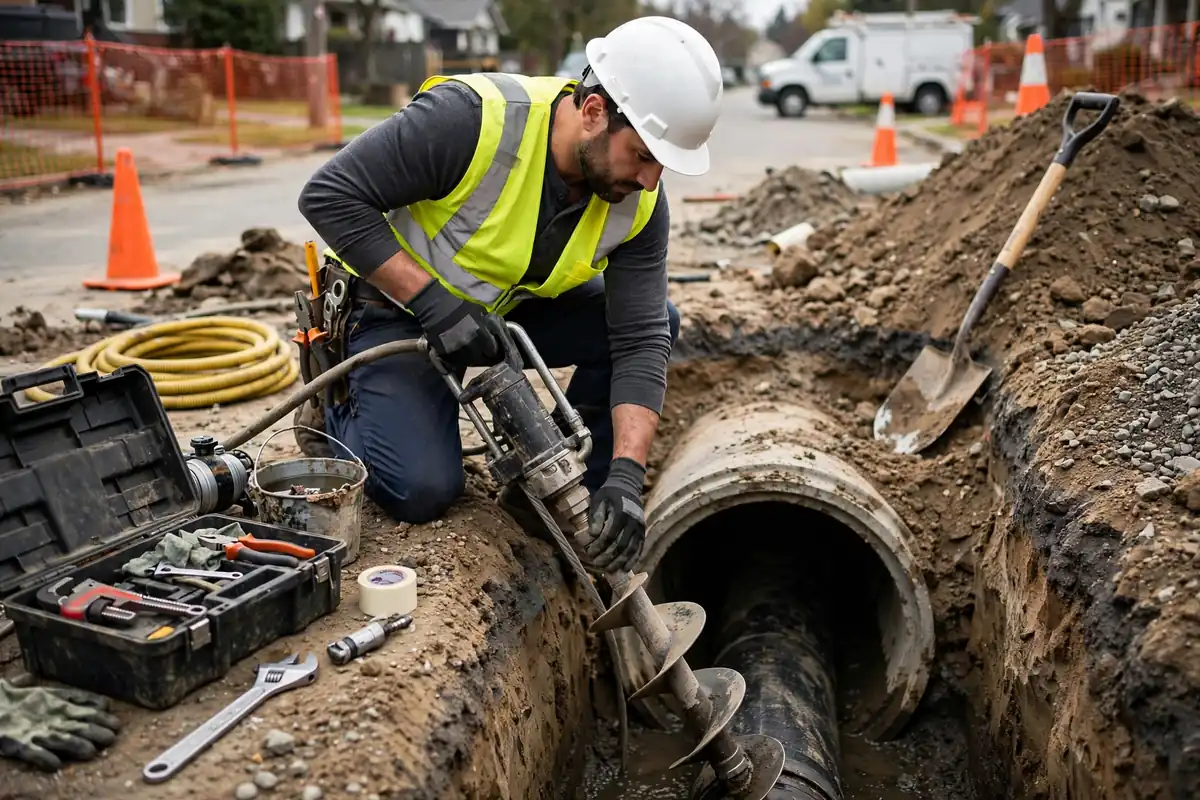
Nobody thinks about their sewer line until it fails, and that is exactly why failures are so expensive. In Perth Amboy, the case for preventive sewer maintenance is stronger than in most New Jersey cities: the housing stock is old, the laterals are largely clay tile and cast iron, mature trees line the streets, and the waterfront neighborhoods add tidal groundwater to the mix. Every one of those factors works against a lateral every day.
Sewer Line Repair Group offers scheduled maintenance programs for Perth Amboy homeowners, landlords, and property managers. A program is not a subscription to worry about; it is a calendar of practical services, a camera inspection on a set interval, preventive cleaning when the footage shows buildup, root control before roots become plugs, and a written record of the line's condition over time. The goal is simple: no surprises, no emergency backups, and a lateral that reaches the end of its natural life on schedule instead of years early.
This page explains what a sewer maintenance program includes, why Perth Amboy's conditions make it worthwhile, what homeowners can do between visits, and how maintenance records pay off at sale time.
What a Sewer Maintenance Program Includes
The backbone of maintenance is the periodic camera inspection. On the first visit the crew establishes a baseline: a full video survey of the lateral from building to tap, with the length, material, depth changes, joints, and any defects documented. That baseline becomes the reference every future inspection is compared against. New roots at a joint, a belly deepening by inches, grease accumulating faster than before, all show up as changes from baseline long before they cause symptoms.
Preventive cleaning follows the inspection's findings rather than a rigid schedule. If the camera shows grease narrowing the line, a hydro jetting pass restores full diameter. If roots are probing a joint, a root-cutting pass plus a foaming root treatment keeps them back. The cleaning is always guided by video, which is what separates maintenance from the old approach of waiting for a backup and then paying for an emergency cleaning.
The third element is the written record. After every visit the homeowner receives the inspection notes, video stills or a link to the footage, and a plain-language assessment of the line's trend: stable, slowly degrading, or approaching a decision point. For landlords and property managers, those records go into the property file and settle every future dispute about pre-existing conditions. A line that has been maintained and documented is also the easiest line to sell with a house.
Why Perth Amboy Laterals Need Scheduled Attention
The age of the pipe stock is the first reason. Clay-tile laterals from the 1920s through 1950s dominate neighborhoods like Chickentown, Hall Avenue, the State Street corridor, and downtown. Their mortar-packed joints are the weak point, admitting roots and groundwater while the pipe itself can remain serviceable for years. A line like that does not need replacement today, but it does need someone watching the joints, because the interval between stable and failed can be a single aggressive growing season.
The tree canopy is the second reason. Washington Park, the mature oaks of Colonia, and street trees across the older neighborhoods send roots toward the steady moisture of a sewer lateral year after year. Roots do not care that a line was cleaned last spring; they probe every joint every season. A maintenance program times root control to the growing cycle instead of the backup cycle, which is cheaper and far less disgusting.
The third reason is water. Waterfront neighborhoods along the Arthur Kill and Raritan Bay sit on high groundwater, and nor'easters and heavy summer storms surcharge the system. Storm seasons leave silt in low spots and stress joints, so a post-storm-season inspection catches what the weather did. In industrial-adjacent areas like Maurer and Keasbey, where excavation is complicated by legacy conditions, keeping an existing line healthy through maintenance is worth more than it is anywhere else, because replacement there is harder.
What Homeowners Can Do Between Visits
The single biggest favor a homeowner can do a sewer lateral is keeping grease out of it. Cooking fats poured down the kitchen sink cool and solidify in the lateral, and over years they narrow the pipe from the inside. Wipe pans into the trash, use a sink strainer, and run hot water with dish soap after greasy loads. It sounds trivial, but grease is the most common avoidable cause of sewer cleaning calls.
What goes down the toilet matters just as much. Only human waste and toilet paper belong there. Wipes labeled flushable do not break down the way paper does, and they snag on any roughness in the pipe, joints, scale, root hairs, and accumulate. Feminine hygiene products, cotton swabs, dental floss, and paper towels all behave the same way. In an old clay-tile lateral with imperfect joints, a household that flushes wipes is on a countdown to a cleaning.
Outside, watch the line's path. The lateral runs from the house to the street; the maintenance baseline documents exactly where. Do not plant aggressive-rooted trees over it, and be cautious with deep-rooted shrubs. If a cleanout cap goes missing or gets buried under mulch, uncover it, because an accessible cleanout is what lets a future cleaning happen without pulling a toilet. Small habits, kept for years, are what separate a line that lasts from one that fails early.
Maintenance for Landlords and Property Managers
Rental properties concentrate every sewer risk: more occupants, less care about what goes down the drain, and tenants who report problems late. A maintenance program for a rental is really a risk program. The baseline inspection documents the line's condition at lease turnover, so a backup six months later can be investigated instead of argued about. If the video shows the line was clean and the blockage is wipes and grease, the cause is tenant behavior; if it shows roots through a failed joint, it is a capital repair. Evidence ends disputes.
Multi-unit buildings in Perth Amboy's denser corridors, State Street, Smith Street, downtown, carry heavier loads on building sewers that may be original clay or concrete lines a century old. These deserve shorter inspection intervals because the consequence of failure is multiplied across units and the access for emergency work is cramped. A scheduled cleaning during a vacancy turnover is dramatically cheaper than an emergency call with tenants unable to use their bathrooms.
The records are an asset at sale or refinance. A buyer evaluating an older Perth Amboy multifamily asks about the sewer, and a file with dated camera footage and maintenance history answers completely. Landlords who maintain their sewers spend less on emergencies and negotiate from strength; landlords who do not tend to discover their laterals at the worst possible moment.
How Maintenance Records Affect a Home Sale
Sewer laterals are becoming a standard part of New Jersey home inspections, and Perth Amboy's old housing stock makes them a frequent negotiation point. A seller with a maintenance file, baseline video, inspection history, dated cleanings, walks into that conversation with proof. The line is not a mystery; it is a documented system with a known condition and a care history. That documentation regularly keeps thousands in credits off the table.
Buyers should ask for it. When evaluating a Perth Amboy home built before 1970, a sewer camera inspection is as important as the roof inspection. If the seller has maintenance records, review them. If not, get your own inspection before closing, because a failed lateral discovered after purchase is the buyer's problem and the buyer's bill. The inspection costs a fraction of a replacement and tells you exactly what you are buying underground.
For the seller, maintenance is also timing. A line that the records show is slowly degrading can be replaced proactively before listing, on the seller's schedule, rather than becoming a deal-killer mid-transaction. Or the seller can list with the records and let the buyer see an honestly maintained older line. Either position is stronger than the alternative: a buyer's inspector finding a root-choked clay lateral nobody knew about, forty-eight hours before closing.
Service Areas
Schedule Your Visit
One call connects you with a local sewer professional serving Perth Amboy, NJ — day or night.
Schedule Your Visit: (833) 713-2101Frequently Asked Questions
How often should my sewer line be inspected?
For a clay-tile or cast-iron lateral in Perth Amboy, every one to two years is sensible, annually if mature trees sit near the line. A newer PVC or HDPE lateral can go three to five years between inspections. The first inspection sets the real interval: a clean, sound line earns a longer gap, while a line with root activity or degrading joints earns a shorter one. The inspection schedule should follow the pipe's condition, not a calendar template.
Is sewer maintenance worth it for an old clay pipe?
Often yes, because maintenance and replacement are not the same decision. A clay lateral with sound pipe but leaky joints can run for years under a maintenance program of inspection, preventive cleaning, and root control. Maintenance buys those years at a fraction of replacement cost and keeps the line from failing catastrophically. When the camera eventually shows the pipe itself failing, the maintenance record makes the replacement decision obvious and well-timed.
What is a foaming root treatment?
It is a chemical treatment applied through the line that fills the pipe with foam carrying a root-killing agent. The foam coats the pipe walls and reaches into the joints where roots enter, killing the root mass inside the pipe without harming the tree itself. It is used after mechanical root cutting to slow regrowth between maintenance visits. It is a management tool, not a repair: it does not fix the open joint the roots came through.
Can maintenance prevent tree root problems entirely?
It manages them, which is the realistic goal for an old clay lateral. Scheduled root cutting timed to the growing season plus foaming treatments keeps roots from ever forming a plug, and inspections catch any joint that degrades. The only way to end root intrusion permanently is to eliminate the entry points by replacing the line with seamless HDPE or gasketed pipe. Maintenance is the bridge that gets an aging line to that decision on your schedule.
Do I need maintenance if my drains work fine?
That is exactly when maintenance has the most value. A lateral can be accumulating grease, growing roots, and developing joint leaks for years while the drains still run, because flow continues until the very end. The first symptom of many lateral failures is a backup, not a warning. An inspection of a working line establishes the baseline cheaply; an emergency call for a failed line does not.
What happens during a maintenance visit?
The crew runs a camera through the lateral from an accessible cleanout and records the full pass, comparing it to the baseline footage. If the video shows buildup or roots, they clean the line with the appropriate method, augering, jetting, or root cutting, and apply a root treatment if needed. You receive the footage, a written assessment of the line's trend, and a recommendation for the next interval. A typical visit takes one to two hours.
Will maintenance help with storm-related backups?
It reduces the risk. Storm surcharging pushes water back through the system, and a lateral that is already half-full of grease, roots, or silt has no capacity to absorb it. A maintained line with full diameter and clear joints handles surge far better than a neglected one. Maintenance cannot change the water table or the city main's capacity, but it makes sure your lateral is never the weak link it does not have to be.