Sewer Line Replacement in Perth Amboy, NJ
Sewer line replacement in Perth Amboy, NJ swaps a failed lateral for a new pipe, usually trenchless pipe bursting or a traditional open-cut dig. It is the answer when clay-tile or cast-iron laterals are cracked, collapsed, or so root-choked that cleaning no longer holds. The result is a seamless, watertight line built to outlast its predecessor by decades.
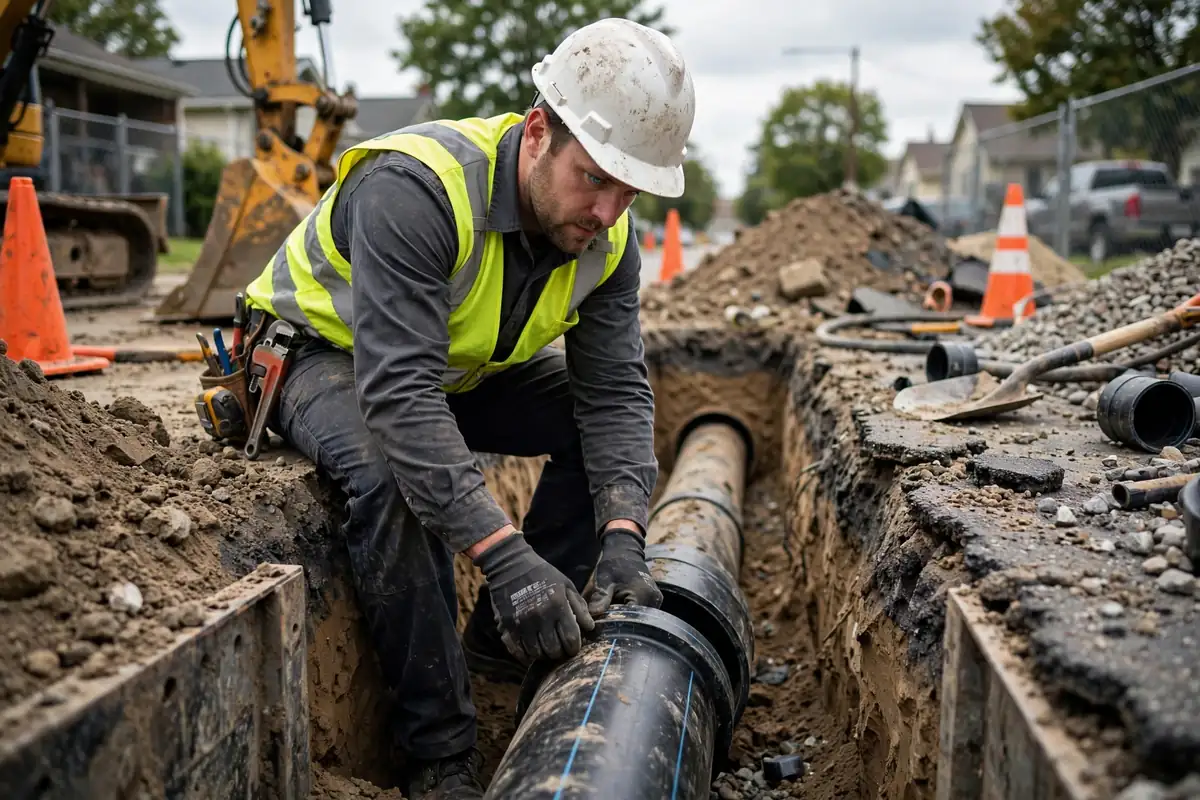
Every sewer lateral has a lifespan, and in Perth Amboy a huge number of them have reached it. Clay-tile laterals laid in the 1920s through 1950s are now sixty to a hundred years old. Their joints were packed with mortar or oakum, not rubber gaskets, so they have been letting tree roots in and groundwater out for decades. Cast-iron laterals from the same era corrode from the inside, narrowing year by year until flow stalls completely. When a pipe is broken at that level, cleaning treats the symptom and replacement cures the disease.
Sewer Line Repair Group replaces failed laterals in Perth Amboy with modern pipe installed by the method that fits the property: trenchless pipe bursting, which pulls a new HDPE line through the old one's path, or traditional open-cut replacement where conditions demand it. The choice is made from camera footage and a site survey, not from a default.
This page explains how to know a lateral is done, the replacement methods available, what the work looks like day to day, and how a new line behaves differently from the one it replaces.
How to Tell a Sewer Line Is Beyond Repair
The camera footage is the verdict. A lateral with a single cracked section or a bad joint is a repair candidate; spot repairs or lining can address it. A lateral whose video shows a pattern of failure, cracked joints every few feet, multiple root intrusions, a collapsed segment, or a long belly holding standing water, is telling you the whole pipe has reached end of life. Replacing one section of a pipe that is failing everywhere is postponing the inevitable.
Recurrence is the practical signal. If a line needs root cutting every year, if backups return within months of a thorough cleaning, or if the same section keeps collapsing, the pipe is not recoverable. Age is the context: a clay-tile lateral from 1925 in Chickentown or a cast-iron line from a 1940s home near the waterfront is not owed more chances. It has served longer than its design life.
There is also the quiet failure: a lateral that is not backing up but is leaking. Groundwater infiltrating through broken joints shows up as standing water in the pipe on camera and as unusually lush grass above the line. Exfiltration, wastewater leaking out, shows as soggy patches or odors. A leaking line can run for years without a dramatic backup, which is why a camera inspection before buying an older Perth Amboy home is one of the smartest investments a buyer can make.
Trenchless Pipe Bursting: Replacement Without the Trench
Pipe bursting is the workhorse method for full lateral replacement in Perth Amboy, and it was practically designed for this city's problems. Two small pits are dug: one at the house, one at the curb or tap. A bursting head is pulled through the old pipe, fracturing the clay tile or cast iron outward into the surrounding soil while pulling a brand-new seamless HDPE line in behind it along the exact same path.
The result is a new lateral with no joints underground, which matters enormously in neighborhoods like Colonia, Iselin, and Chickentown where root intrusion through joints was the original complaint. The HDPE line is watertight, flexible enough to tolerate ground movement, and smooth inside so grease and solids keep moving. Lawns, driveways, and sidewalks above the line stay largely intact because only the two pits are open.
Bursting does have limits. It cannot be used if the old line has completely collapsed and the path is gone, if utilities run too close to the lateral's path, or where the old pipe sits under a structure. Extremely shallow lines and lines with severe grade problems are sometimes better served by an open cut that lets the crew reset the slope. The camera survey and utility markout decide which method is safe before work begins.
Traditional Open-Cut Replacement
Open-cut replacement is the classic method: excavate along the lateral's full length, remove the failed pipe, lay new PVC or ABS on a prepared bed, and backfill. It is the right choice when pipe bursting cannot work, when the line's grade needs to be corrected, or when the property owner wants every inch of the old pipe gone and visually confirmed. In some industrial-adjacent ground in Maurer or Keasbey, where soil conditions complicate trenchless work, open cut gives the crew complete control.
The trade-off is surface disruption. A trench runs from house to curb, and anything above it, grass, beds, walkways, must be restored afterward. On tight lots in downtown Perth Amboy, Hall Avenue, or the State Street corridor, there may barely be room for the equipment, which is why trenchless methods dominate those neighborhoods. But where the yard is open and the grade needs fixing, a dig-and-replace is honest, verifiable work.
Professional open-cut work protects the property as it goes: the trench is shored or sloped for safety, existing landscaping is stripped and saved where possible, and backfill is compacted in lifts to prevent the settling that plagued the old line. The new pipe gets a final camera pass and a pressure or water test before the trench is closed, and the inspection verifies grade and joints before backfill buries them.
What the Replacement Process Looks Like
Replacement starts with diagnosis, not digging. A full camera inspection maps the lateral: material, length, depth, failure points, and the tap location. The utility markout identifies gas, water, electric, and telecom lines in the path. In Perth Amboy's older districts the record drawings do not always match reality, so experienced crews probe and pothole to confirm before committing to a method.
On work days, the sequence is straightforward. Access pits or the trench are opened, the old line is disconnected at both ends, and the new pipe goes in, by bursting pull or by hand-laying in the open trench. Cleanouts are installed at the building exit and the property line, which future-proofs the new line: any future issue can be accessed and inspected without excavation. The connection to the city tap is made to utility specification, and the inspector signs off on grade and joints before anything is buried.
Homeowners keep using their water with brief planned interruptions. A full replacement typically takes two to four working days for a residential lateral, with surface restoration following. The property looks like work happened, pits or a trench line, but a good crew leaves it graded and seeded so it recovers in one growing season. The difference the homeowner notices first is invisible: drains that simply work, every fixture, every time, and no more scheduling root cuttings.
Living With a New Sewer Line
A replaced lateral changes the maintenance picture completely. The new pipe is seamless or gasketed, watertight, and smooth, so the recurring problems of the old line, root intrusion, joint leakage, scale, stop applying. What remains is ordinary care: keep grease out of the drains, do not flush wipes or hygiene products, and have the line camera-inspected every several years to confirm it is holding its grade.
Tree planting deserves a thought. If a mature tree sat on the old line, its roots will find the new pipe eventually, but HDPE and gasketed PVC give them no joints to enter, so the tree becomes a non-issue instead of a countdown. New trees near the lateral's path should be root-friendly species planted at a distance, which is cheap insurance.
The records matter too. Keep the post-installation camera video, the as-built showing the new line's location and depth, and the permit paperwork. When you sell, that folder answers every question a buyer's inspector can ask about the sewer, and a documented new lateral is a genuine selling point in a city where old lines are the norm. Perth Amboy buyers are learning to ask; sellers with paperwork win the negotiation.
Service Areas
Ask a Pro
One call connects you with a local sewer professional serving Perth Amboy, NJ — day or night.
Ask a Pro: (833) 713-2101Frequently Asked Questions
How do I know if I need replacement or just a repair?
The camera decides. Isolated damage, one cracked section, one bad joint, points to a spot repair or a short lining. Widespread failure, cracked joints along the whole line, multiple root entries, a collapsed segment, or a long belly, points to replacement. Age counts too: a clay-tile lateral from the 1920s is not worth patching section by section. A reputable contractor shows you the video and explains which category your line falls into.
Will pipe bursting damage my yard?
Far less than an open trench. Pipe bursting needs only two small pits, at the house and at the curb, instead of a continuous trench. The old pipe is fractured underground and the new line is pulled through the same path, so the surface above the line is barely disturbed. You will have two areas to restore rather than a whole trench line, and most lawns recover within a season.
How long does a sewer line replacement take?
Most residential laterals in Perth Amboy are replaced in two to four working days: inspection and markouts, excavation or pit setup, pipe installation, utility connection, inspection, backfill, and surface restoration. Open-cut jobs with deep lines, long runs, or dewatering take longer. Permit and utility-tap scheduling can add calendar time before work starts, so planning ahead matters.
Can I use my plumbing during the replacement?
Mostly yes, with brief planned interruptions. Water use is typically restricted only during the short window when the old lateral is disconnected and the new one is being tied in, usually a matter of hours. The crew coordinates the timing and tells you in advance. There is no extended period without plumbing the way a full interior repipe would cause.
Does the new line connect to the city sewer main?
Yes. Your new lateral runs from the building to the property line or curb, where it connects to the city's tap or wye at the main, to utility specification. The connection is inspected before backfill. If the tap itself is damaged, which the camera sometimes reveals, it is repaired as part of the job so the new line connects to a sound point.
What pipe material will my replacement use?
Trenchless replacements use seamless HDPE pulled in behind the bursting head. Open-cut replacements typically use gasketed PVC or ABS laid on a stone bed. Both are root-resistant, corrosion-proof, and smooth-flowing, a complete break from clay-tile and cast-iron behavior. The material is matched to the installation method and the local conditions, not chosen by habit.
Should I replace the line before it completely fails?
If the camera shows a lateral at end of life, yes, proactively is better. A planned replacement happens on your schedule, in good weather, with time to choose the method and protect the landscaping. An emergency replacement happens during a backup, possibly in winter, with wastewater to deal with and no leverage. Many Perth Amboy homeowners replace after the second root-cutting in two years rather than waiting for the third backup.