Sewer Line Cleaning in Perth Amboy, NJ
Sewer line cleaning in Perth Amboy, NJ clears blockages from the underground pipe that carries wastewater from your home to the public sewer. Camera-guided hydro jetting or mechanical augering removes grease, soap, tree roots, and scale so drains run freely again. It is most effective on intact pipes, and it is usually the first step before any repair decision.
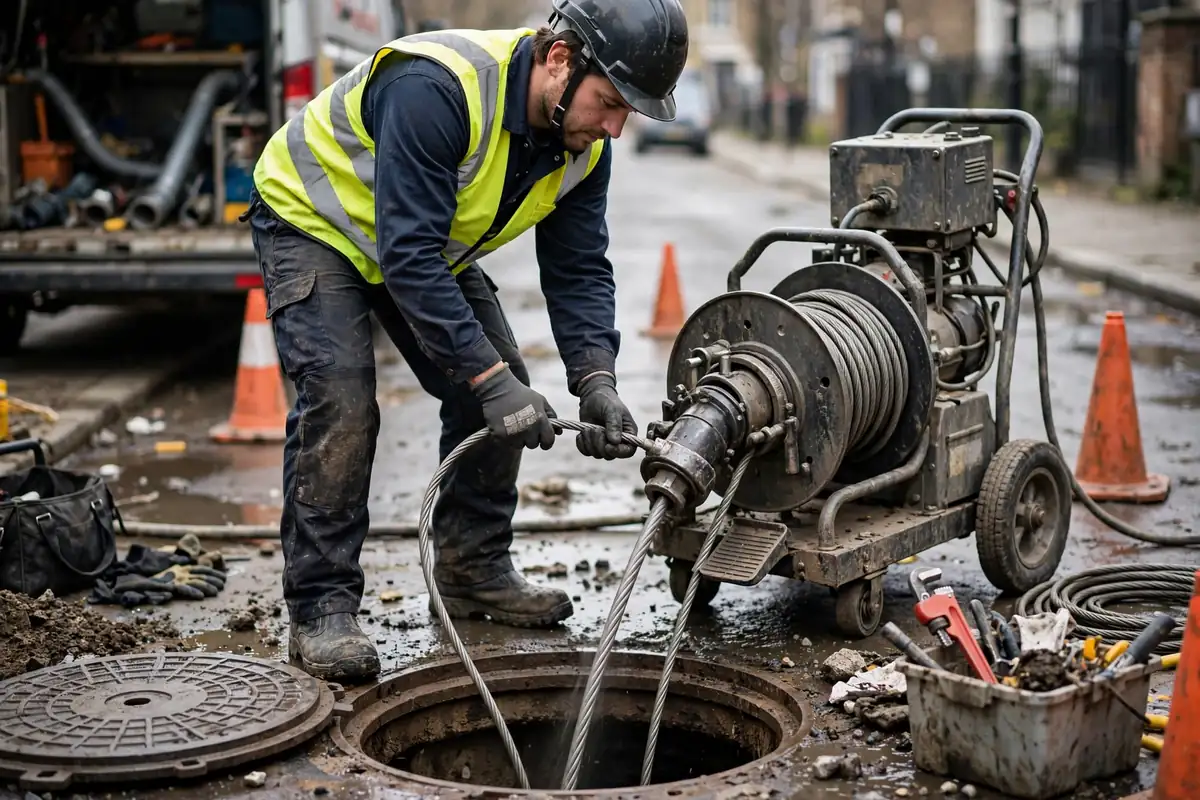
Most Perth Amboy homes still drain through laterals that were installed decades ago, many of them clay-tile or cast-iron lines laid in the 1920s through 1960s. Those pipes collect everything a household sends down the drain, and over the years grease, soap residue, and invasive tree roots narrow them from the inside. A professional sewer line cleaning restores the full flow of that pipe without digging it up, and it also tells you what condition the line is really in.
Sewer Line Repair Group approaches cleaning as a diagnostic service, not just a flush. Every job starts with a camera inspection so the crew knows exactly what is blocking the line, where the blockage sits, and whether the pipe is structurally sound enough to clean. That matters because forcing a jetter through a collapsed clay lateral is a waste of time and money. The camera tells the truth first, and the cleaning follows only when it makes sense.
This page explains how professional sewer line cleaning works in Perth Amboy, NJ, what it removes, how it differs from a simple drain snaking, and the signs that your lateral needs attention. If you are noticing slow drains or backups anywhere in the home, the sections below will help you decide what to do next.
How Professional Sewer Line Cleaning Works
A sewer line cleaning targets the lateral, the single underground pipe that runs from your home to the city sewer main. Technicians access it through an exterior cleanout or, when one does not exist, through a pulled toilet or a roof vent. The first tool down the line is always the inspection camera. Live video shows grease buildup, root clusters, offset joints, bellies where water ponds, and cracks in the pipe wall. This footage guides every decision that follows.
Once the blockage is identified, the crew chooses between mechanical augering and hydro jetting. A motorized auger with a cutting head breaks through dense obstructions like root masses and solidified grease. Hydro jetting uses a hose that sprays water at very high pressure in multiple directions, scouring the pipe walls back to their original diameter. Jetting cleans what an auger only punches through, so for heavy grease and scale it is usually the better finish.
After cleaning, the camera goes back in. A second pass confirms the line is clear and documents the pipe's condition, which is the part many homeowners miss. If the video shows intact pipe with normal joints, the cleaning solved the problem. If it shows cracked clay sections, separated joints, or a collapsed segment, the cleaning bought time but a repair conversation comes next. Either way you leave with evidence instead of guesses.
Hydro Jetting vs. Drain Augering: Which Your Line Needs
Augering and hydro jetting solve different problems, and many Perth Amboy laterals need both in sequence. The auger is the opener: a spinning cable with interchangeable heads that bores through root plugs, compacted paper, and grease dams. It restores passage fast and works on fragile pipe because the operator controls how aggressive the cutting head is. For a home with a clay-tile lateral from the 1930s, a gentle auger pass is often the safe first move.
Hydro jetting is the deep clean. Pressurized water strips grease, soap scum, and mineral scale from the entire circumference of the pipe, which matters in cast-iron laterals that narrow with rust scale from the inside. Jetting also flushes debris downstream to the city main instead of leaving chunks of it sitting in the line, which is a common reason drains clog again weeks after a simple snaking.
The decision comes down to pipe condition. Sound PVC or ABS laterals handle full-pressure jetting without concern. Older clay-tile or cast-iron lines get a gentler pressure and a nozzle matched to the pipe size, with the camera confirming beforehand that the walls can take it. A reputable crew explains which method they chose and why, and shows you the before-and-after video to prove it worked.
Signs Your Perth Amboy Sewer Line Needs Cleaning
Sewer trouble announces itself through the drains, and the pattern matters. A single slow sink is usually a branch-line issue. When multiple fixtures drain slowly at once, when flushing the toilet makes the bathtub gurgle, or when the basement floor drain backs up during laundry, the blockage is in the shared lateral and a cleaning is the right first response. Gurgling is air trapped behind a narrowing in the pipe, and it almost always means buildup is winning.
Sewage odors around floor drains or in the basement are another signal. Dry traps explain an occasional smell, but a persistent odor after fixtures are used points to standing wastewater in the lateral. Outside, a soggy patch of yard between the house and the street, especially along the lateral's path, can mean the pipe is full and water is finding relief joints in old clay tile.
Do not wait for a full backup to act. Sewer backups are not just inconvenient; wastewater carries bacteria that contaminate finished basements and require professional sanitizing. Perth Amboy's older housing stock means many laterals are already near their practical capacity from decades of buildup, so slow drains here deserve a camera inspection rather than another bottle of chemical drain cleaner, which does nothing for roots or grease in a buried line.
What Sewer Cleaning Can and Cannot Fix
Cleaning removes soft and fibrous obstructions beautifully. Grease layers that built up over years of dishwater, root clusters that grew through a clay joint, accumulated paper and wipes, and scale in cast-iron lines all respond to the right combination of augering and jetting. For a structurally sound lateral, a thorough cleaning can restore full flow and keep it that way for a long stretch, especially when paired with a maintenance plan.
Cleaning cannot repair broken pipe. Cracked clay sections, separated joints, bellies where the pipe has settled, and collapsed segments all survive a cleaning pass because they are geometry problems, not obstruction problems. The post-cleaning camera pass is what separates these situations. If the video shows a belly holding standing water, cleaning will clear the current backup but the belly will collect debris again, and the honest recommendation shifts from cleaning to repair or replacement.
Tree roots sit in a middle category. Cleaning cuts roots back, but the joint they entered through is still open, so roots grow back. In Perth Amboy neighborhoods with mature street trees and long clay-tile laterals, repeated root cutting every year or two is common. At some point the math favors a permanent fix such as pipe bursting or lining the affected section, and the camera footage lets you make that call with real evidence.
Sewer Line Cleaning Across Perth Amboy's Neighborhoods
Perth Amboy's housing eras shape what cleaning work looks like street to street. In Chickentown, Hall Avenue, and the State Street corridor, many homes still drain through original clay-tile laterals laid before 1940, with joints that admit roots and grease. Cleaning here almost always starts with roots, and the camera frequently finds that the line's joints have lost their seals. On tight lots in downtown and along Hall Avenue, crews plan access carefully because there is little room for equipment.
Spa Springs and Iselin-area homes built from the 1950s through 1970s carry a mix of late clay-tile, early PVC, and some transitional materials. These laterals are often still structurally viable, which makes cleaning an excellent value: a full jetting pass can reset a line that was never actually broken, just filthy. Homes near Washington Park, Merrill Park, and along mature tree-lined streets should budget for roots as a recurring maintenance item rather than a surprise.
Near the waterfront and the Arthur Kill, tidal infiltration and stormwater surcharging add a seasonal dimension. Heavy rain can push water back through low-lying laterals and leave silt behind, so a cleaning after a major storm season is often preventive rather than reactive. Wherever you are in the service area, the approach is the same: camera first, the right cleaning method second, and an honest read of the video before anything else is proposed.
Service Areas
Book Service
One call connects you with a local sewer professional serving Perth Amboy, NJ — day or night.
Book Service: (833) 713-2101Frequently Asked Questions
How often should a sewer line be cleaned?
It depends on the pipe and the household. A sound PVC lateral with normal use may go many years without attention. A clay-tile lateral with mature trees nearby often needs attention every one to two years because roots keep finding the joints. Homes with heavy grease use or large families clog faster. A camera inspection sets the real interval: it shows whether buildup is accumulating fast enough to justify scheduled cleaning or whether a one-time pass resolved it.
Will hydro jetting damage my old pipes?
When matched to the pipe, no. Professionals reduce pressure and use the correct nozzle for clay-tile, cast-iron, or Orangeburg lines, and they camera-inspect first to confirm the pipe can handle it. The risk comes from blasting a fragile, already-collapsed line at full pressure without checking, which a careful crew never does. Proper jetting scours buildup without harming sound pipe walls.
What is the difference between drain cleaning and sewer line cleaning?
Drain cleaning targets the smaller pipes inside your home, the branch lines serving individual sinks, tubs, and toilets. Sewer line cleaning targets the single underground lateral that carries everything to the city main. If only one fixture is slow, it is a drain problem. If multiple fixtures misbehave together or the basement floor drain backs up, the lateral is involved and a sewer line cleaning is the right service.
Can tree roots be permanently removed by cleaning?
Cleaning cuts roots back to the pipe wall, but the joint they entered through remains open, so roots regrow, typically within one to two growing seasons. Chemical root treatments can slow regrowth between cleanings. The only permanent answer is eliminating the entry point: replacing the affected section or the full lateral with seamless HDPE pipe, which has no joints for roots to exploit. A camera inspection shows whether roots are a maintenance item or a replacement signal.
Do I need to dig up my yard for sewer line cleaning?
No. Cleaning is entirely trenchless by nature. The crew works through an existing cleanout, a pulled toilet, or a roof vent, and everything happens underground. The only digging involved in sewer work is when a line needs actual repair or replacement, and even then trenchless methods often avoid most of it. If a company suggests excavation for a simple cleaning, get a second opinion.
What should I do before the technician arrives?
Clear a path to your sewer cleanout if you know where it is, usually a capped pipe sticking up in the yard or basement near where the lateral exits the house. Note which fixtures are misbehaving and when the problem started, since that pattern helps the technician. Avoid running large amounts of water right before the visit so the line is at its normal state. There is no need to move heavy furniture or empty cabinets.
Why do my drains clog again soon after being snaked?
A basic snaking punches a hole through the blockage instead of removing it, leaving grease, roots, and debris clinging to the pipe walls. The hole closes again as debris re-accumulates, sometimes within weeks. A camera-guided cleaning with augering followed by hydro jetting removes the full buildup and confirms the result on video, which is why it lasts much longer than a quick snake.