Emergency Sewer Repair in Perth Amboy, NJ
Emergency sewer repair in Perth Amboy, NJ handles failures that cannot wait: sewage backing up into your home, a burst or collapsed line, and major leaks flooding basements or yards. Sewer Line Repair Group responds around the clock, diagnoses the problem with camera inspection, stabilizes the situation, then completes a lasting repair by excavation or trenchless methods.
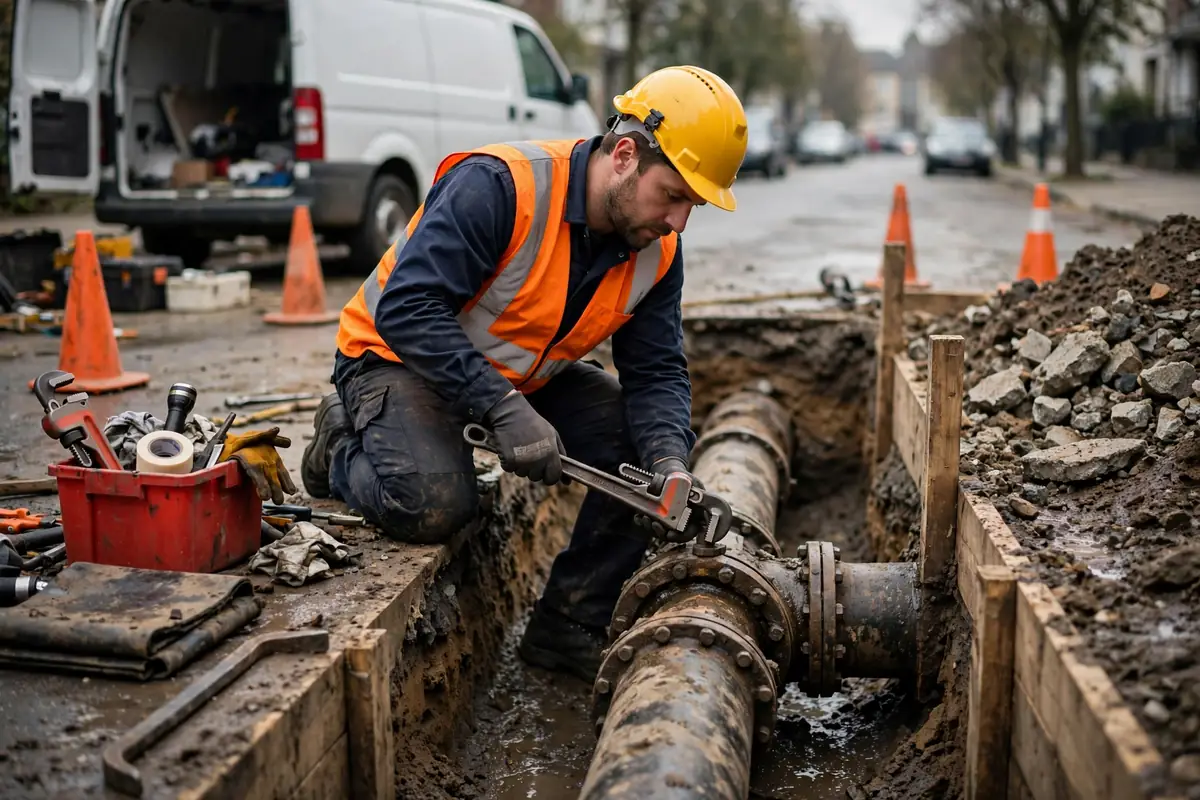
A sewer emergency rarely happens at a convenient hour. It shows up as sewage rising in a basement shower at midnight, a yard that turns into a foul-smelling swamp after a heavy rain, or every toilet in the house backing up at once on a holiday weekend. These are not slow-drain annoyances — they are active failures of the line that carries waste away from your home, and they need a crew that treats them as urgent.
In Perth Amboy, the housing stock makes emergencies more likely than in newer suburbs. Much of the city was built in the early-to-mid 20th century on clay-tile laterals that are now 60 to 100+ years old. Freeze-thaw cycles open the joints, tree roots push through, and nor'easter downpours surcharge lines that were never designed for today's storm intensity. When one of these lines finally gives way, the result is sudden and messy.
Emergency sewer repair is the rapid-response side of sewer work: stop the damage, find the failure, and make a repair that holds. This page explains what counts as an emergency, what to do while help is on the way, and how the repair itself unfolds.
What counts as a sewer emergency
Not every drain problem is an emergency, and knowing the difference saves panic. A single slow sink is a plumbing issue; sewage backing up through multiple fixtures — toilets, tubs, and floor drains together — is a main-line emergency. A burst or collapsed lateral that is actively leaking waste into a yard, crawlspace, or basement is an emergency. So is a major blockage that has completely stopped drainage in a home with no working toilet. Strong, persistent sewer gas odors combined with gurgling drains can signal a dangerous backup building in the line. If waste is entering living spaces, if water cannot drain at all, or if a leak is spreading, call for emergency service rather than waiting for morning. When in doubt, describe the symptoms — a dispatcher can usually tell from a short description whether the situation needs an immediate crew.
What to do while help is on the way
The first rule is to stop adding water to the system: don't run faucets, flush toilets, or start laundry or dishwashers, because everything you send down has nowhere to go and may come back up. Keep people and pets away from any backed-up sewage — it carries bacteria and should not be touched without protection. Don't pour chemical drain cleaners into a backed-up line; they won't clear a main-line failure, they can damage pipes, and they create a hazard for the technician who opens the line. If you know where your sewer cleanout is — usually a capped pipe near the foundation or in the yard — make sure it's accessible so the crew can get straight to work. Note when the problem started and which fixtures are affected; that timeline helps the technician diagnose faster on arrival. Then wait for the crew rather than attempting the repair yourself.
How emergency technicians diagnose the problem
An emergency visit starts with stabilizing the situation — relieving pressure on the line and stopping active backup where possible — then moves to finding the cause. The key tool is the sewer camera: fed through a cleanout or an opened access point, it shows the inside of the pipe in real time, revealing roots, breaks, collapses, bellies, or blockages, along with distance markers that say exactly how far down the line the problem sits. A locating device above ground pinpoints the spot in the yard or under the slab, so the crew knows precisely where to dig or set up trenchless equipment. This diagnosis-first approach matters in emergencies because guessing wastes the time you don't have. Once the failure is located and its extent is known, the technician can recommend the repair that actually fits — a spot repair, a trenchless replacement, or a full excavation.
Emergency repair methods: digging versus trenchless
Emergencies sometimes force excavation — a fully collapsed line with no intact path, or a failure directly under a foundation that needs hands-on access, may have to be dug. But many emergencies are resolved trenchlessly even under time pressure. Pipe bursting can replace a destroyed line by pulling new pipe through the old path with only entry and exit pits, and pipe lining can seal a cracked but standing line from the inside. Trenchless methods are often preferred in emergencies precisely because they are faster to set up: no waiting on extensive excavation, shoring, and surface restoration. The deciding factors are the pipe's condition, its location, and what the camera shows — not the clock. A reputable emergency crew will explain which method fits your failure and why, rather than defaulting to the most disruptive option.
Why sewer emergencies are common in Perth Amboy's older neighborhoods
Perth Amboy's housing tells the story. Neighborhoods like Chickentown, Hall Avenue, and the Amboy Avenue section are dominated by homes built in the 1920s through 1950s, still served by their original clay-tile laterals — pipes now 70 to 100+ years old, with joints that freeze-thaw cycles have been working open for decades. Mature street trees send roots into those open joints, and once roots establish, they grow into dense masses that trap solids and eventually break the pipe. Add the city's low elevation near Raritan Bay and the Arthur Kill, where high groundwater and nor'easter surcharging push water into lines from the outside, and you get a system under pressure from both directions. Homeowners in these neighborhoods benefit most from periodic camera inspections, because the emergencies almost always announce themselves in advance — slow drains, gurgling, recurring clogs — to anyone watching for the signs.
Emergency service coverage across Perth Amboy
Emergency sewer repair is available throughout Perth Amboy, NJ 08861 — from downtown and the waterfront neighborhoods to Chickentown, Spa Springs, and the Amboy Avenue section — and in nearby Avenel, Iselin, Fords, Colonia, Port Reading, and Sewaren. If you are dealing with a backup or a burst line now, call.
Service Areas
Contact Us Now
One call connects you with a local sewer professional serving Perth Amboy, NJ — day or night.
Contact Us Now: (833) 713-2101Frequently Asked Questions
Is a sewer backup always an emergency?
When sewage is actively entering your home through multiple fixtures, yes — it is both a health hazard and a situation that gets worse the longer it runs. A single slow drain can usually wait for a scheduled visit, but waste coming up through tubs, showers, or floor drains needs an immediate response. If you are unsure, describe the symptoms when you call.
What should I do first during a sewer backup?
Stop using all water immediately — no flushing, no laundry, no running faucets — because anything you send down may come back up. Keep people and pets away from the sewage, and don't use chemical drain cleaners, which can't fix a main-line failure and endanger whoever opens the pipe. Make sure your sewer cleanout is accessible for the arriving crew.
Do you handle sewer emergencies at night and on weekends?
Yes. Sewer failures don't follow business hours, so emergency service is available around the clock, including nights, weekends, and holidays. When you call with an emergency, the priority is stabilizing the situation — stopping active backup or leakage — and then diagnosing and repairing the failure.
Can a burst sewer line be fixed without digging up my yard?
Often. If the camera shows the line's path is still traceable, pipe bursting can pull a new line through the old one with only small entry and exit pits, and pipe lining can seal cracks from the inside. Full excavation is reserved for cases where the pipe has collapsed beyond what trenchless methods can follow or where access requires it.
How do I know if it's a sewer problem or a regular plumbing problem?
The pattern tells the story. One slow fixture usually means a localized plumbing issue; multiple fixtures backing up together — toilets, tubs, and drains — points to the main sewer line. Gurgling sounds from drains when other fixtures are used, and sewage appearing at the lowest drain in the house, are classic main-line signs.
Will an emergency repair destroy my yard or driveway?
Not necessarily. Trenchless methods are designed to minimize surface disruption, and even when excavation is required, the dig is targeted to the failure point located by camera — not a trench across the whole property. Restoration of the work area is part of completing the job properly.