Commercial Sewer Services in Perth Amboy, NJ
Commercial sewer services in Perth Amboy, NJ cover the drains, building sewers, and laterals that businesses depend on — from Smith Street restaurants and retail to warehouses near the Arthur Kill. Sewer Line Repair Group inspects lines with cameras, clears blockages, and repairs or replaces pipe with methods planned around your hours, so operations stay open.
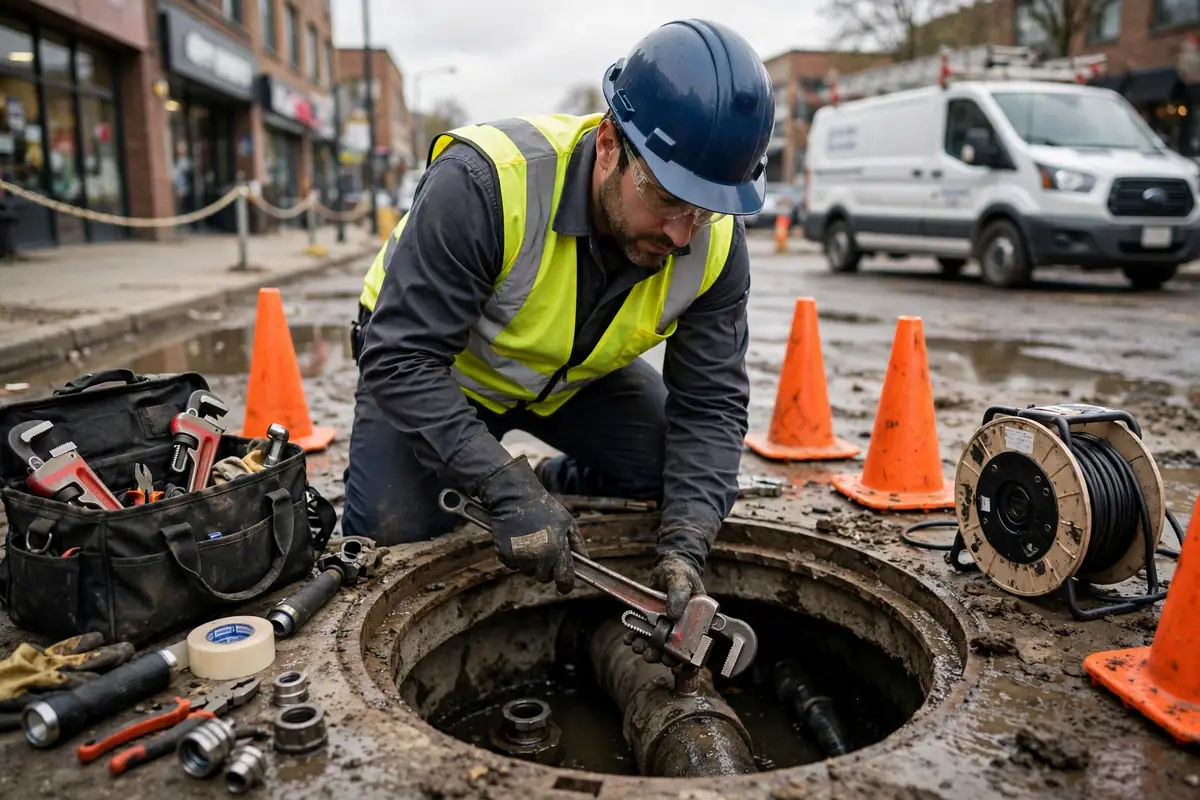
A commercial building's sewer system works harder than any home's. Restaurants send grease and food solids down the line all day; office buildings and apartment complexes stack dozens of fixtures onto shared laterals; warehouses and industrial sites near the Arthur Kill run floor drains and process lines that residential crews rarely see. When one of these systems slows or fails, the cost is measured in closed doors, lost tenants, and health-code trouble — not just inconvenience.
Perth Amboy's commercial corridors add their own complications. Many of the mixed-use buildings along Smith Street and the downtown Urban Enterprise Zone sit on century-old clay laterals shared between ground-floor retail and upstairs apartments. Waterfront industrial parcels in the Maurer section and Port Reading deal with high water tables and legacy utility runs. A commercial sewer contractor here has to read the building, the pipe material, and the ground conditions before choosing a repair method.
That is the work this page describes: inspection, cleaning, repair, and replacement of commercial sewer lines in Perth Amboy, NJ, planned around business operations. Whether you manage a single restaurant or a portfolio of rental buildings, the goal is the same — diagnose precisely, fix durably, and keep your doors open.
What commercial sewer service actually covers
A commercial service visit starts with the building sewer — the line that carries everything from the structure to the public main. Services include camera inspection of long or large-diameter runs, mechanical cleaning and descaling of buildup, root cutting where laterals pass under landscaping or parking strips, spot repairs at failed joints, and full lateral replacement when a pipe has reached the end of its service life. For restaurants, service extends to the lines downstream of grease interceptors, where hardened grease narrows pipe over time. For apartment buildings and multi-tenant properties, it means tracing problems that cross unit boundaries — a backup on the first floor may start three floors up or thirty feet out in the lateral. Property managers also use commercial sewer service for pre-purchase due diligence, documenting the condition of underground lines before acquiring a building, and for maintenance plans that schedule inspections and cleanings before problems surface.
Warning signs a building's sewer needs professional attention
Commercial sewer trouble rarely announces itself politely. Watch for several fixtures draining slowly at once — a pattern that points to the main line rather than one sink. Recurring backups, especially ones that return weeks after a cleaning, suggest roots, scale, or a structural defect rather than a simple clog. Persistent sewer odors in restrooms, kitchens, or basement utility areas, gurgling sounds from floor drains when toilets flush, and wet or sunken patches in parking lots or landscaped areas above the lateral's path are all classic signals. In restaurants, grease-related slowdowns often show up first in the kitchen line during peak hours. For landlords, tenant complaints that cluster — multiple units reporting issues within days — usually mean the shared building sewer is the source. Catching these signs early matters because commercial lines serve more people and fail faster under load; a problem that a homeowner might nurse for months can shut down a business in a weekend.
Planning sewer work around your business hours
The biggest difference between residential and commercial sewer work is the schedule. A restaurant cannot lose its kitchen on a Friday night; a retail store cannot have its entrance torn up during the holiday season; an office building cannot have restrooms offline during work hours. Commercial projects are sequenced around those realities. Diagnostics and camera inspections are typically scheduled first, during low-traffic windows, so the scope of repair is known before anyone commits to a method. Cleaning work can often be done in sections, keeping part of the system live. When replacement is required, trenchless methods — pipe bursting or pipe lining — are favored specifically because they shrink the work footprint to a few access points instead of an open trench across the property. For jobs that must be excavated, work is phased so that only the affected section is offline, with temporary bypass pumping arranged where the building cannot go without drainage. The planning conversation happens up front: what the business needs to stay open, and how the repair fits inside it.
Trenchless options that keep parking lots and landscaping intact
Open-cut excavation is expensive for commercial properties in ways that go beyond the pipe itself. Digging across a parking lot means cutting asphalt, closing spaces, and paying for repaving; digging through landscaping means replacing plantings and irrigation. Trenchless methods avoid most of that. Pipe bursting pulls a new high-density polyethylene line through the path of the old pipe, breaking the damaged pipe outward as it goes — useful when the existing line is collapsed or undersized. Pipe lining installs a resin-saturated liner inside the existing pipe and cures it into a new pipe within the old one, which works when the host pipe is structurally sound enough to hold the liner. Both methods need only entry and exit pits, so a parking lot might lose two small work areas instead of a full trench. For commercial sites, where surface restoration costs can rival the pipe work itself, trenchless is often the practical choice — though a camera inspection has to confirm the line qualifies before either method is specified.
Preventive maintenance plans for commercial properties
Commercial sewer systems reward routine attention. A maintenance plan typically starts with a baseline camera inspection that maps the line's condition, material, and trouble spots, then schedules cleanings at intervals matched to the building's use — more often for restaurants with grease loading, less often for offices with light use. Between visits, simple habits make a difference: staff training on what goes down kitchen drains, grease interceptor pumping kept on schedule, and tenant guidelines in apartment buildings about wipes and hygiene products that don't break down. Plans also document the system over time, so a property manager acquiring or selling a building has a record of line condition rather than a surprise. The economics are straightforward: scheduled cleaning and inspection cost far less than an emergency backup that closes a dining room or floods a ground-floor retail space. For portfolios, standardizing a plan across properties keeps every building on the same inspection cycle.
Commercial sewer coverage in and around Perth Amboy
Sewer Line Repair Group provides commercial sewer services across Perth Amboy, NJ 08861 — including the Smith Street district, downtown mixed-use blocks, and the waterfront industrial zones — and for businesses in Woodbridge, Carteret, Rahway, Edison, Sayreville, and South Amboy. If your property sits outside these areas, call to confirm coverage.
Service Areas
Schedule Your Visit
One call connects you with a local sewer professional serving Perth Amboy, NJ — day or night.
Schedule Your Visit: (833) 713-2101Frequently Asked Questions
How is commercial sewer work different from residential jobs?
Commercial lines are larger, longer, and serve more fixtures, so failures affect more people and escalate faster. The work also has to fit around business operations — scheduling, phased repairs, and surface restoration for parking lots or dining areas all factor into the plan. Diagnostics tend to be more involved too, since problems can cross tenant or unit boundaries.
Can sewer work be done without closing my business?
Often, yes. Camera inspections and most cleaning work can be scheduled during off-hours with no interruption. Trenchless repairs need only small access pits, so the property stays usable. When excavation is unavoidable, the work is phased and temporary bypass pumping can keep drainage live. The plan is built around your operating hours before work begins.
What causes recurring backups in commercial buildings?
The most common causes are root intrusion at pipe joints, grease and scale buildup narrowing the line, structural defects like cracks or bellies that trap debris, and lines that are simply undersized for the building's current use. If backups return after cleaning, a camera inspection usually finds a structural cause that cleaning alone cannot fix.
Do restaurants need different sewer care than other businesses?
Yes. Kitchen lines accumulate grease that hardens inside pipes, narrowing them over time — even with a grease interceptor in place, the line downstream still needs attention. Restaurants benefit from more frequent inspection and cleaning cycles, plus staff habits that keep solids and grease out of drains. Ignoring it leads to backups during service hours.
How long does a commercial sewer replacement take?
It depends on the length of the run, the method, and site conditions. Trenchless replacements are typically completed faster than open-cut jobs because there is far less excavation and restoration. A camera inspection first establishes the scope, and you will get a realistic timeline for your specific property before any work starts.
Can trenchless methods handle large-diameter commercial lines?
Trenchless methods scale to commercial pipe sizes, but qualification still depends on the individual line. Pipe bursting can even upsize a line during replacement, which helps buildings whose drainage needs have grown. A camera inspection measures the diameter and condition of the pipe so the right method is specified.
How often should a commercial building's sewer be inspected?
For most commercial properties, an inspection every one to two years is a sensible baseline, with restaurants and food-service buildings on the more frequent end because of grease loading. Buildings with mature trees near the lateral, or with a history of backups, should also be inspected more often. A baseline inspection sets the schedule.