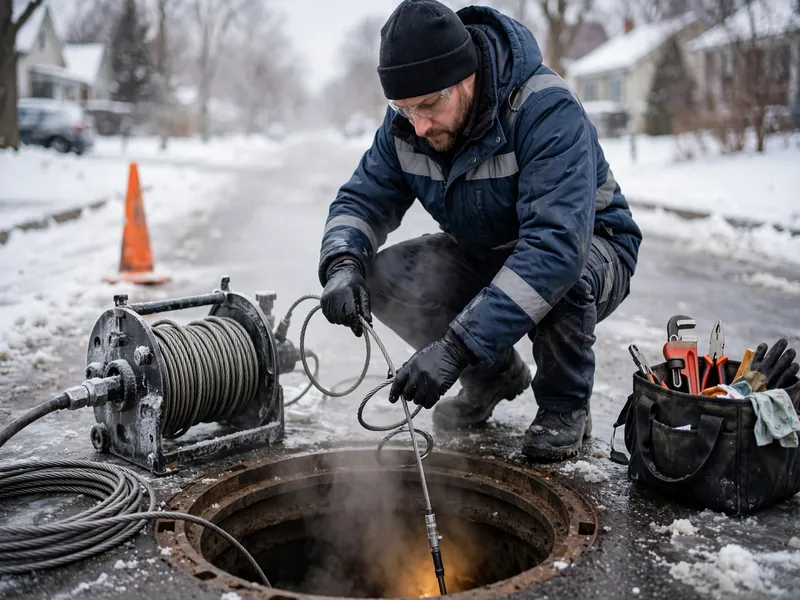
Why Cold Weather Is Hard on Sewer Lines
Sewer lines run below the frost line in New Jersey, so the pipe itself rarely freezes solid. What winter does instead is attack the margins. Fats, oils, and grease from cooking solidify much faster when the ground around the pipe is cold, and they build up in layers until water can no longer pass. Holiday cooking season is the peak time for grease-related clogs, and January is when they tend to reveal themselves.
Freeze-thaw cycling is the other culprit. As soil freezes and thaws, it expands and contracts around the pipe. In a line with aging joints or shallow spots — common in Perth Amboy neighborhoods where laterals run under driveways or shallow yards — that movement can open joints, shift bellies, and let roots or soil intrude. Each winter adds a little more movement to pipes that are already tired.
Then there is the load factor. Holiday gatherings mean more showers, more laundry, more dishwasher cycles, and more toilet flushes over a few days. A line that handles a normal household fine can back up under guest-weekend volume. If your line has a partial blockage you do not know about, winter is when you find out.
Keep Grease Out of the Drains
The single most effective winter habit is also the simplest: nothing greasy goes down the drain. Pour cooking oil, bacon fat, and meat drippings into a container, let them cool, and throw them in the trash. Wipe greasy pans with a paper towel before washing. This matters all year, but it matters most when cold pipes turn liquid fat into concrete-like blockages.
Garbage disposals do not solve the grease problem — they just chop food into smaller pieces that combine with grease further down the line. In winter, scraping plates into the trash and keeping the disposal for light use reduces the sludge that builds up in a cold lateral.
If you have had slow drains in the past, consider a professional line cleaning before the holidays. A sewer line cleaning service in the fall clears out the buildup that a winter of grease and guest traffic would otherwise turn into a backup.
Insulate Exposed Pipes and Check Your Cleanout
While the buried lateral is protected by depth, exposed sections are not. Pipes in unheated crawlspaces, basements near exterior walls, and above-ground vent stacks can get cold enough to cause trouble. Foam pipe insulation on any exposed drain or vent piping is cheap insurance and takes an afternoon to install.
Your sewer cleanout — the capped pipe that gives access to the lateral — deserves a check too. Make sure the cap is present, intact, and accessible, not buried under leaves or snow. If a winter backup does happen, a working, accessible cleanout is what lets a technician clear the line quickly instead of digging in frozen ground. If you do not have a cleanout at all, fall is a reasonable time to talk to a plumber about adding one before winter makes the job harder.
Also walk the yard once before the ground freezes. Soft, sunken, or unusually lush patches over the line's path can signal a developing problem that winter will make worse.
Get a Camera Inspection Before the Ground Freezes
A sewer camera inspection is the winter-prep step most homeowners skip and most regret skipping. The camera shows exactly what is happening inside the pipe — root intrusion, cracks, bellies, grease buildup — so you can fix small problems in October instead of emergencies in January.
Fall is the ideal season for this because the ground is still workable and schedules are calmer than the holiday rush. If the camera finds roots, a cleaning or root treatment now prevents a winter blockage. If it finds a crack or offset joint, you have time to plan a repair rather than scrambling during a cold snap.
For homes in Perth Amboy's older neighborhoods, where clay and cast-iron laterals are the norm, a pre-winter inspection every couple of years is simply prudent. You would not drive through winter without checking your tires; think of the camera inspection the same way for your sewer line.
Watch for Warning Signs All Winter
Even with good preparation, stay alert. Gurgling toilets, drains that slow down, water backing up in a basement floor drain or shower when the washing machine runs, and sewage smells in or around the house are all signs that the line is struggling. In winter, do not wait these out — cold weather does not improve a struggling sewer line, and a partial blockage can become a full backup fast when holiday traffic hits.
If a backup happens, stop using water immediately and call for emergency sewer repair rather than trying to power through it. Running more water into a blocked line only pushes more sewage into the house. Avoid chemical drain cleaners entirely; they rarely reach a main-line blockage and they can damage pipes and create hazards for the technician who eventually works on the line.
Keep the number for a sewer specialist somewhere you can find it in a panic — on the fridge, in your phone contacts. The middle of a January backup is the worst time to be searching for help.