Length of the Line: More Pipe, More Project
The most obvious factor is also the most consistent: a longer lateral means a bigger job. Your sewer lateral runs from your home's foundation to the municipal main, often at the street. On a small city lot, that distance might be modest. On a deeper lot or one where the main sits across the street, the run can be far longer.
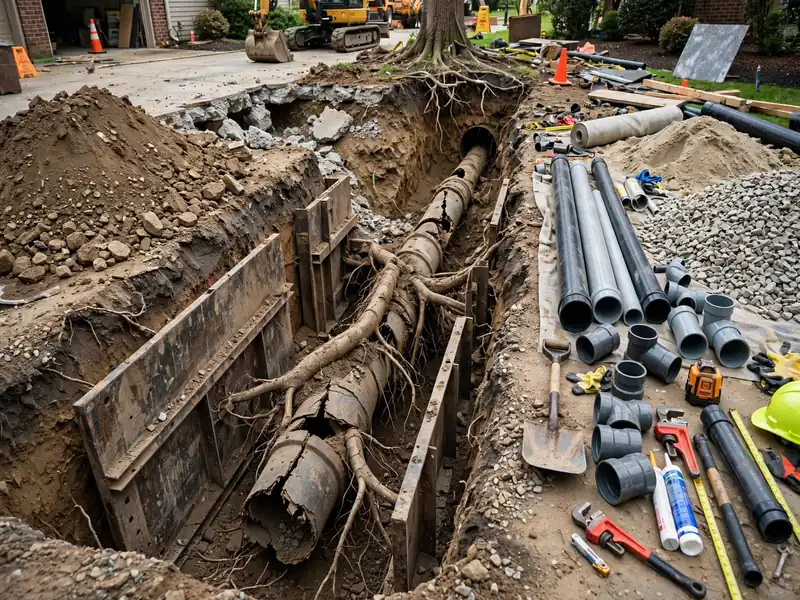
Length affects everything downstream. More pipe means more material, more labor hours, more soil moved, and more surface to restore afterward. With trenchless methods like pipe bursting, a longer pull may require additional pits or staged work. With traditional excavation, every extra foot of trench is another foot of digging, shoring, backfill, and compaction.
This is also why estimates ask for the property layout rather than just the address. The crew needs to know the real run length, the cleanout locations, and where the connection to the city main sits before they can scope the project accurately.
Depth: The Multiplier Nobody Sees
Depth is the factor homeowners least expect and crews watch most closely. A lateral buried three feet deep is a straightforward dig. One buried eight or ten feet deep is a different project entirely — deeper trenches require shoring or stepped walls for safety, larger excavators, longer days, and far more backfill and compaction.
In Perth Amboy, depth varies by neighborhood and by how the original builder graded the lot. Lines must slope downward toward the street main, so the depth at the connection point is fixed by the city's infrastructure. The deeper the municipal main, the deeper the trench at the street end of your run.
Depth also interacts with groundwater. In low-lying areas near the Raritan Bay waterfront, the water table sits high, and deep trenches can fill with water as fast as they are dug. Dewatering adds equipment, time, and complexity — another reason waterfront properties often scope larger than identical homes on higher ground.
Repair Method: Excavation, Bursting, or Lining
The method chosen is one of the largest scope drivers. Traditional open-trench excavation is the most disruptive: it opens the full run, removes the old pipe, lays new pipe, and then restores everything above — lawn, driveway, sidewalk, and sometimes street pavement. It works on any pipe in any condition, but restoration is a major line item.
Pipe bursting replaces the line through small entry and exit pits, fracturing the old pipe outward while pulling a new one into place. It dramatically reduces surface disruption, which shrinks the restoration portion of the project. It needs a pipe with enough remaining structure to guide the bursting head, and it cannot easily navigate sharp bends.
Cured-in-place lining creates a new pipe inside the old one through a single access point, with almost no digging. When the host pipe qualifies, lining is the least invasive option and the least disruptive to your property. The tradeoff is that severely collapsed or badly offset pipes cannot be lined at all — the method has strict qualification requirements.
The cheapest method on paper is not always available for your line, and it is not always the right one. A camera inspection determines which methods your pipe actually qualifies for, and the honest comparison is between the methods that fit your situation, not every method in the abstract. Our breakdown of pipe bursting for sewer replacement explains when that trenchless path makes sense.
Soil, Access, and What Sits Above the Pipe
What the crew digs through matters. Rocky soil, dense clay, and old construction fill slow excavation and wear equipment. Sandy, loose soil digs easily but may need more shoring to keep trench walls from collapsing. Perth Amboy's soil varies by neighborhood — older industrial-adjacent areas can surprise crews with buried debris from a century of development.
Access shapes the project too. A lateral running under open lawn is the easy case. One running beneath a concrete driveway, a mature oak tree, a deck, or an addition to the house complicates everything. Heavy equipment needs room to work, and tight side yards or fences limit what can be brought in.
What sits above the pipe also determines restoration scope. Replacing lawn is one thing; replacing a stamped-concrete driveway, a paver patio, or a section of sidewalk is another. Tree preservation adds complexity when the lateral threads through root zones. Every surface feature above the line is something the project must either avoid or restore, and that shows up in the scope.
Permits, Inspections, and Municipal Requirements
Sewer work in New Jersey requires permits, and the permitting picture adds both time and line items to a project. Excavation in the public right-of-way — the strip between your sidewalk and the street, and the street itself — typically requires separate street-opening permits, traffic control plans, and restoration to municipal specifications.
Connection to the city main is its own regulated event. The tie-in point must meet local code, and many municipalities require an inspection of the connection before backfill. Some require specific pipe materials or bedding standards. These are not optional extras; the work cannot legally proceed without them.
Permit timelines also affect scheduling. A project that needs street-opening approval may wait weeks for the permit before the first shovel hits the ground. When comparing proposals, ask each contractor what permits are included and who handles the applications — a lower bid that leaves permitting to you is not actually lower.
Condition of the Existing Line and Connection
What the crew finds when they open the ground can change the scope. A straight run of deteriorated clay tile is the baseline case. A line with severe bellies — low spots where the pipe sags and holds water — needs regrading, not just replacement in place. A line that has separated at the foundation wall may require foundation penetration work.
The connection to the municipal main is a frequent surprise. If the tap at the street is damaged, offset, or made of obsolete material, replacing your lateral without addressing the connection leaves a weak link at the most critical joint. Some projects extend into the street to make a proper new tap, which adds excavation, permits, and street restoration.
This is the strongest argument for a thorough camera inspection before anyone scopes the job. Video shows the bellies, offsets, and connection condition that a surface-only estimate cannot see. An estimate built on camera evidence is the one you can trust; an estimate built on assumptions is the one that grows.
How to Compare Estimates Fairly
When you collect proposals, compare scope, not just the bottom line. A complete estimate should spell out the method, the pipe material and diameter, the linear footage, the depth, the permit responsibilities, the connection work at the main, and exactly what restoration is included — lawn, concrete, asphalt, and cleanup.
Watch for what is missing. Proposals that exclude permits, exclude restoration, or describe the connection to the city main vaguely are not cheaper; they are incomplete. The true comparison is the total finished project: a working line, a legal connection, and your property restored.
Ask each contractor the same questions: Which method are you recommending, and why does my line qualify? What did the camera show? What happens if you find something unexpected underground? How will you restore my driveway and lawn? The contractor who answers clearly and specifically is usually the one whose estimate reflects the real project. For a method-by-method comparison, see our guide to trenchless sewer repair in Woodbridge and the surrounding service area, which walks through how the options differ on real Perth Amboy-area jobs.