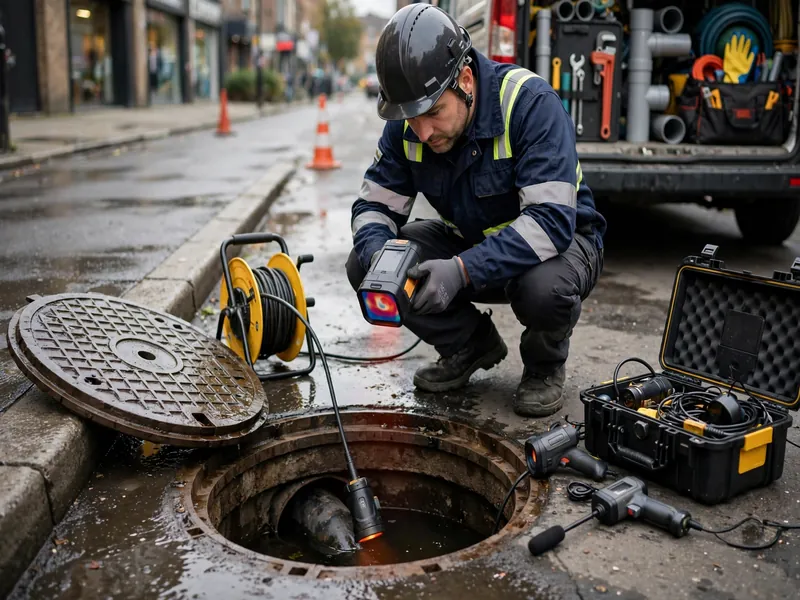
Camera Inspection: Seeing Inside the Pipe
The workhorse of leak detection is the sewer camera — a waterproof, self-leveling camera on a flexible cable, fed through a cleanout or pulled toilet. As it travels the line, the technician watches a live feed and the cable's distance counter, building a map of the pipe's interior: cracks, separated joints, root masses, bellies, and collapses all show up clearly.
For leaks, the camera is unmatched at finding the cause. A crack with soil visible through it, a joint gap with roots pouring in, a section where the pipe has ovaled or broken — these are direct visual evidence. The locator sonde in the camera head also lets the technician mark the exact spot on the surface above, so any excavation targets precisely the right place.
A sewer camera inspection is usually the first step in any leak investigation because it answers the most questions at once: is there damage, what kind, and exactly where. Most other methods confirm or supplement what the camera finds.
Smoke Testing: Finding Leaks by Where Smoke Escapes
Smoke testing sounds dramatic but it is simple and effective. Non-toxic, odorless smoke is blown into the sewer system, and technicians watch where it emerges. Smoke rising from the ground, from foundation cracks, or from unexpected places indicates a break in the line — smoke follows the path of escaping sewer gas.
This method excels at finding leaks that cameras can miss: cracked vent stacks, dry traps, faulty wax rings, and breaks in sections the camera cannot reach. It is also useful for mapping — in older Perth Amboy properties where nobody is quite sure where the line runs or how buildings connect, smoke reveals the system's actual layout.
Smoke testing is non-invasive and quick, which makes it a good screening tool before committing to excavation. If smoke pours out of a particular section of lawn, that is where the digging happens — not three yards away.
Acoustic Listening and Pressure Testing
Acoustic leak detection uses sensitive ground microphones to listen for the sound of water escaping a pressurized pipe. It is more commonly associated with water supply lines than sewers, but it has applications in sewer work too — particularly for pressurized force mains and for pinpointing leaks in accessible pipe runs.
For gravity sewer lines, a related approach is the isolation or pressure test: sections of the line are sealed off and filled with water or air, and the section that loses pressure is the section with the leak. This is methodical work — testing segment by segment — but it definitively narrows the problem area when visual methods are inconclusive.
These methods tend to come into play for tricky cases: intermittent leaks, leaks under slabs or structures where excavation is costly, or situations where the camera shows a suspect area but the exact failure point needs confirmation before anyone starts digging.
Dye Testing: Simple, Cheap, and Surprisingly Useful
Dye testing is exactly what it sounds like: bright, non-toxic dye is flushed through a fixture or poured into a suspect area, and the technician watches where colored water appears. It is low-tech, but it answers specific questions very well — is this damp spot connected to the sewer system, which fixture feeds this drain, is the sump pump discharging into the sanitary line.
In Perth Amboy's older homes, where decades of renovations have created plumbing mysteries, dye testing maps connections that no diagram shows. That mystery dampness in the basement corner? Dye in the upstairs shower either colors it or rules the shower out. It is detective work, and it is often the fastest path to an answer.
Dye testing is frequently combined with camera work. The camera shows the pipe's condition; the dye confirms which flows go where. Together they resolve the ambiguous cases that either method alone leaves open.
What Happens After the Leak Is Found
Detection is diagnosis, not treatment. Once the leak's location and cause are known, the conversation turns to repair options — and the precision of modern detection is what makes good repair options possible. A leak pinpointed to a six-foot section might be a candidate for spot repair or targeted leak repair; widespread damage across the whole line points toward lining or full replacement.
This is why accurate detection saves money twice: first by avoiding unnecessary excavation, and second by matching the repair to the actual problem. A homeowner who knows exactly what is wrong can get meaningful quotes and make an informed decision, instead of authorizing open-ended exploratory digging.
If you suspect a leak — smells, soggy spots, unexplained water — start with detection, not a shovel. The hour or two a proper diagnosis takes is the cheapest part of any sewer repair project, and it is what keeps the rest of the project from going sideways.