What Scheduled Sewer Maintenance Includes
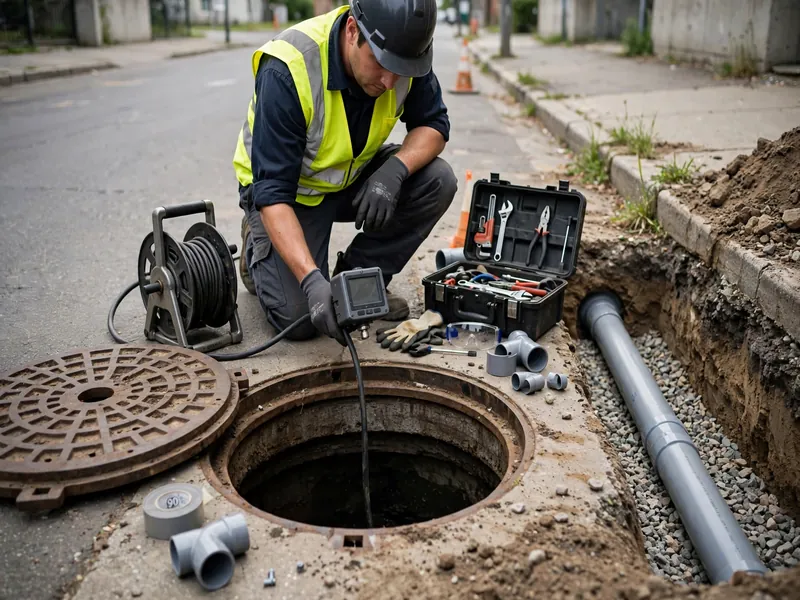
A typical maintenance visit combines inspection and cleaning. A technician runs a camera through the line to check its condition — looking for root intrusion, cracks, scale buildup, bellies where water pools, and offset joints. Then, based on what the camera shows, the line gets cleaned with the right method: hydro jetting for grease and sludge, a root-cutting head for intrusions, or a standard cable cleaning for minor blockages.
The schedule depends on the line's condition. A healthy modern PVC lateral might only need a camera check every couple of years with cleaning as needed. A line with known root intrusion or heavy grease exposure might get cleaned annually. The point is that the schedule is set by the pipe's actual condition, not by guesswork.
Good maintenance also includes a written record of each visit — what the camera showed, what was cleaned, and how the line is trending over time. That history is valuable if you ever sell the home, and it is essential for spotting slow-developing problems like a belly that is getting deeper year over year.
Who Benefits Most in Perth Amboy
Three kinds of homes get the most value from maintenance plans. First, homes with large trees near the sewer line. Perth Amboy's mature neighborhoods have decades-old maples, oaks, and other trees whose roots are relentlessly drawn to the moisture and nutrients in sewer lines. Roots do not stop growing because you cut them once — they grow back, which is exactly why scheduled maintenance beats one-off cleanings.
Second, homes with older pipe materials. Clay tile laterals with their many joints, and cast-iron lines with decades of internal scaling, both degrade in ways that reward regular monitoring. A camera inspection catches a cracked clay tile before it collapses; a cleaning keeps cast-iron scale from narrowing the pipe to a trickle.
Third, homes with a history of problems. If you have had a backup or a root cleaning in the past, your line has told you what it needs. A sewer maintenance service on a schedule addresses the cause on a timetable you control, instead of waiting for the problem to pick its own moment — usually a holiday weekend.
How Maintenance Prevents Emergencies
Almost every sewer emergency has a backstory. The roots that caused Friday night's backup were growing for months. The grease that sealed the pipe shut was building for a year. The crack that finally collapsed had been widening for seasons. Maintenance works by interrupting those backstories while the fix is still routine.
Consider root intrusion, the most common chronic issue in older Perth Amboy laterals. A root cutting every year or two keeps the intrusion from ever becoming a blockage. Compare that with the alternative: ignoring it until the line backs up, then paying for an emergency clearing plus cleanup of whatever the backup damaged. The math is not close.
The same logic applies to grease and scale. Regular hydro jetting keeps the pipe's interior diameter open and the flow smooth. Left alone, buildup narrows the pipe until a perfectly normal laundry day becomes the last straw. Scheduled camera inspections are what make this preventive approach possible — you cannot manage what you cannot see.
Maintenance vs. Repair: Knowing the Difference
It is worth being clear about what maintenance can and cannot do. Maintenance keeps a functioning line functioning. It clears roots, removes buildup, and monitors condition. It does not fix a collapsed pipe, seal a broken joint, or reverse structural damage. When the camera shows a pipe that is cracked through, bellied badly, or infiltrated beyond what cleaning can handle, that is a repair conversation — lining, bursting, or replacement.
This is actually one of maintenance's biggest benefits: it gives you the repair conversation early, on your terms. Finding out during a scheduled inspection that your line needs attention in the next year or two is entirely different from finding out during a 2 a.m. backup. You can get multiple opinions, plan the timing, and budget for it.
Think of it as the difference between your dentist finding a cavity at a checkup and finding it when the tooth abscesses. Same tooth, very different experience.
What to Ask Before Signing Up
If you are considering a maintenance plan, ask what is actually included: how often the camera runs versus just cleaning, whether you get the video footage, and what happens if a visit reveals a bigger problem. A plan should never lock you into repairs — inspection findings should be presented with options, not pressure.
Ask about the cleaning method too. Hydro jetting, mechanical cutting, and chemical root treatments are different tools for different problems, and the right one depends on your pipe material and condition. Aggressive cleaning on fragile clay tile can do more harm than good; the method should match the pipe.
Finally, ask for the maintenance history in writing after each visit. A provider who documents condition over time is giving you the real product — knowledge about your line — not just a recurring invoice. That record follows the house, not the homeowner, and it is worth keeping with your other house documents.