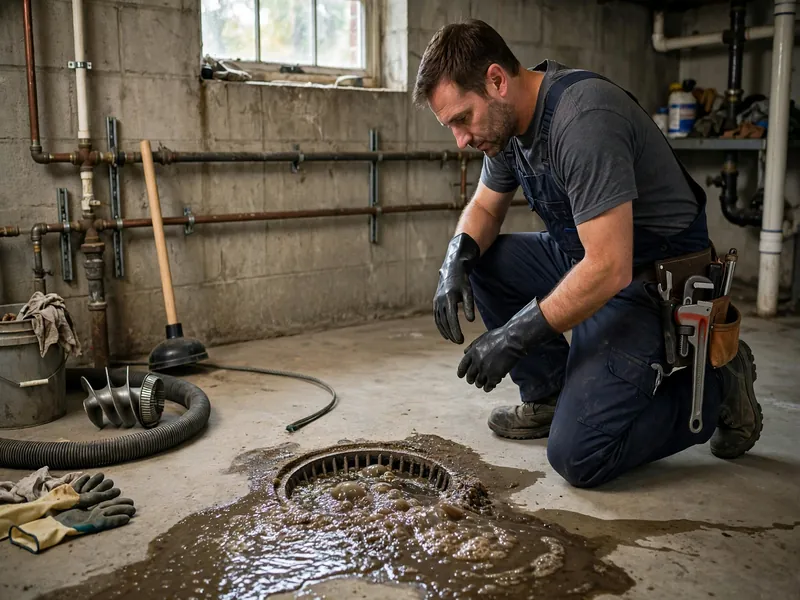
The First Five Minutes: Stop, Avoid, Call
Step one: stop adding water. Every flush, every running faucet, every load of laundry sends more wastewater into a system that is already failing. Tell everyone in the house to stop using water immediately — toilets, sinks, showers, dishwasher, washing machine, all of it. This single action does more than anything else to limit how far the backup spreads.
Step two: stay out of the contaminated area. Sewage is black water — it carries bacteria, viruses, and parasites that cause serious illness. Keep children and pets completely away. If you must enter the area, wear waterproof boots and gloves, and avoid touching your face. Do not wade through sewage to rescue belongings; nothing down there is worth the health risk.
Step three: if you know where your main water shutoff is and the backup is severe, shutting off the water prevents accidental use. Then call for emergency service and describe exactly what you see — which fixtures are affected, how fast it is rising, and whether it started during heavy rain. That last detail matters, because rain-related backups may involve the municipal main.
What NOT to Do During a Backup
Do not plunge a sewage backup. Plunging pressurizes the drain system, and with a main-line blockage, that pressure has nowhere to go except back through other fixtures — potentially forcing contaminated water up through additional drains. What looks like helping usually spreads the problem.
Do not pour chemical drain cleaners into a backed-up system. The chemicals sit in the standing sewage without reaching the blockage, and they create a hazardous mix for the technician who eventually clears the line. Chemical cleaners also damage older pipes, which is the last thing a compromised lateral needs.
Do not wait to see if it drains on its own. A backup that recedes when fixtures stop running has not fixed itself — the blockage is still there, and the next use of water restarts the cycle. Every cycle risks pushing sewage further into flooring, walls, and belongings. Treat any backup, even a receding one, as an active problem requiring professional attention.
What Happens When Help Arrives
The technician's first job is to stop the immediate crisis: clearing the blockage so wastewater can flow out again. This usually means accessing the lateral through a cleanout and using professional augering or jetting equipment to break through the obstruction. The goal of this first visit is restoration of flow, not a full diagnosis.
Once flow is restored, the camera goes in. This is the critical step most homeowners skip, and skipping it is why backups recur. The video shows what caused the blockage — root mass, grease plug, collapsed section, separated joint — and where it sits. Without this evidence, you are guessing at the fix.
The follow-up plan depends on the findings. A grease blockage in an otherwise sound line calls for thorough jetting and a maintenance schedule. Root intrusion calls for clearing plus a repair that seals the entry points. A collapsed or severely offset pipe calls for replacement. The emergency visit stops the bleeding; the camera footage determines the cure.
When Heavy Rain Is the Trigger
Heavy rain is the most common trigger for backups that seem to come from nowhere. During intense storms, the municipal sewer main can surcharge — fill beyond capacity — and push wastewater backward through laterals into homes. Perth Amboy's summer thunderstorms and nor'easters both produce the kind of intense rainfall that stresses older combined or undersized infrastructure.
If your backup started during or right after heavy rain, tell the technician. Rain-related backups may originate in the city main rather than your lateral, which changes both the immediate response and the long-term fix. A backwater valve — a one-way valve installed in your lateral — is the standard defense against municipal surcharges, allowing flow out while blocking flow back in.
Even when rain is the trigger, your lateral's condition matters. A clear, well-maintained line handles pressure surges better than a partially blocked one. Homes that back up in every heavy rain usually have both problems: a stressed municipal system and a lateral that was already restricted. Fixing your side of the equation reduces how often the city's problems become yours.
Preventing the Next Backup
After the immediate crisis, protect the investment in the repair. If roots caused the backup, the entry points must be sealed — lining or replacement — or the roots return. If grease was the cause, change what goes down the kitchen drain and consider a maintenance cleaning schedule. If the line is aging clay tile with multiple defects, plan the replacement on your timeline rather than waiting for the next emergency.
Consider a backwater valve if your home is in a low-lying area or has a history of rain-related backups. It is a modest installation that specifically guards against the municipal-side surcharges no homeowner can control. Homes near the waterfront, where the water table runs high and storm systems work hardest, benefit most.
Document everything. Photograph the damage before cleanup, keep the camera inspection video, and save all repair records. If the backup involved the municipal main, documentation supports any claim with the city. If it was your lateral, the records help future buyers and future contractors understand the line's history. A backup is miserable; make it the last one by fixing the cause, not just the symptom. For ongoing protection, our sewer maintenance service in Perth Amboy covers the full checklist of defenses, from scheduled cleanings to backwater valve guidance.