Sewer Line Replacement in Sewaren, NJ
Sewaren's Arthur Kill waterfront — low elevation, high water table — pairs with pre-1939 and 1940s-60s homes on 60-90+ year-old clay laterals. Full replacement means a watertight jointless HDPE lateral, usually trenchless bursting, with sealed connections stopping tidal infiltration.
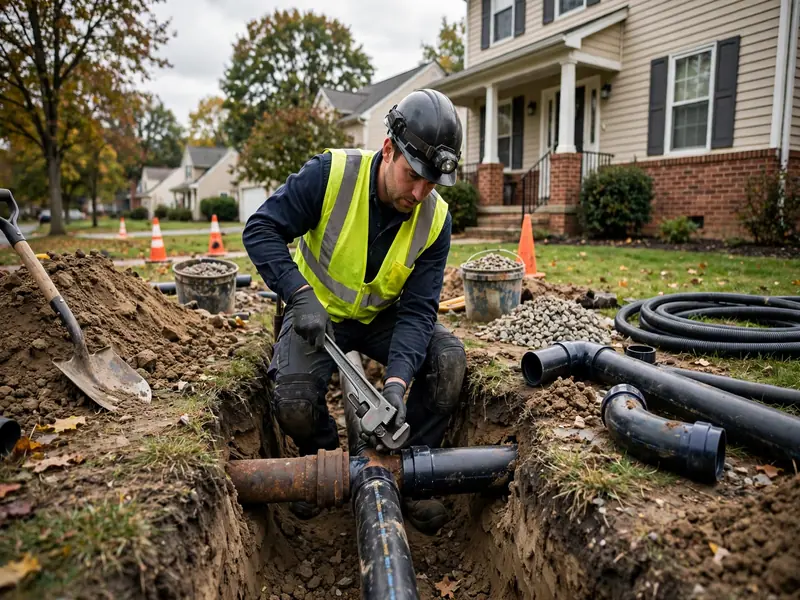
Sewaren is Woodbridge Township's waterfront community — about 3,000 residents on the Arthur Kill, with a history as the Boynton Beach resort opened in 1877. The housing tells that story in layers: early-1900s beach cottages and colonials (26% pre-1939), 1940s-60s homes forming the core (39%), and 1970s-99 infill — now transforming again with new high-rises and single-family infill replacing older structures. Alvin P. Williams Memorial Park and Captain Carlsen Park line the waterfront.
Under those homes run clay-tile laterals now 60 to 90+ years old, in ground where the water table is high and the Kill is never far away. Sewer work in Sewaren fights two enemies at once: age, which cracks joints and invites roots, and water, which infiltrates through every failed joint during nor'easters and high-water events. Our Sewaren replacement service starts with a camera survey, verifies the industrial-legacy ground before any excavation, and installs one new watertight lateral — trenchless bursting where the line qualifies — sealed against the tidal infiltration that defines this waterfront.
Two Enemies: Age From Inside, Tide From Outside
A waterfront lateral fails from both directions. From the inside out: roots enter the clay joints, joints offset with soil movement, tiles crack under freeze-thaw heave — the standard aging of 60-90-year-old pipe. From the outside in: tidal water, stormwater, and groundwater press into every failed joint and crack, filling the line beyond its capacity and surcharging sewage backward into the house. In Sewaren, the two failure modes arrive together, usually during a nor'easter.
This is why the replacement spec here is uncompromising on watertightness. Continuous HDPE pipe has no joints along its entire run — compare the old clay tile, where every three-foot section was a joint and every joint was both a root entry and a water entry. The new lateral doesn't just stop root backups; it stops the line from becoming a tidal inlet every time the Kill rises.
The camera survey documents infiltration directly: water visibly entering between joints, staining that marks the high-water line inside the pipe, sediment deposits showing where tidal water has carried soil into the line. That evidence sets the urgency — a line taking on tidal infiltration is a line that needs replacement before the next storm season, not after. The finished lateral carries the home's wastewater and nothing else, in calm weather and in surge.
Digging in High-Water-Table Waterfront Ground
Sewaren's waterfront carries a documented industrial legacy, and the fill soils along the Kill can hold legacy lines and unpredictable ground that don't appear on modern utility maps. Sewer excavation here starts with verification: private utility locates beyond the standard one-call markings, review of the lateral's depth and surroundings against the camera survey, and an excavation plan built for the actual ground.
The high water table shapes every dig. Trenches in low-lying waterfront ground need dewatering pumps and shoring as standard equipment — standing water in an open trench undermines the bedding the new pipe sits on, and unshored walls in saturated fill are a safety hazard. We stage dewatering and trench boxes before excavation begins, not after the trench fills.
Trenchless pipe bursting sidesteps most of this: the tool works through wet ground along the existing grade, needing only two pits instead of a dewatered trench. That's why it's the preferred method on Sewaren's waterfront lots wherever the line qualifies — it replaces the pipe without opening the ground that makes digging here complicated. Where the camera shows collapse or a city tap needing direct work, open-cut sections are excavated with full dewatering, shoring, and visibility. The method follows the ground truth.
Beach-Era Cottages, Mid-Century Core, New Infill: Three Depths
Some of Sewaren's beach-era cottages date to the early 1900s, and their laterals can be original shallow clay lines — laid when the resort community was young, sometimes only a few feet deep. Shallow lines are the simplest replacements we do: less excavation, simpler shoring, faster restoration, and often a straightforward open-cut project where a deeper line would demand trenchless methods.
But shallow doesn't mean simple without verification. The camera survey measures depth at every point along the run, so shallow sections are planned — and quoted — for what they are, not for the deep-line assumptions that would overprice them. Shallow lines also interact with surface water differently: they're the first to take on infiltration during heavy rain, which is one reason the old ones fail faster.
For the 1940s-60s core housing with standard-depth laterals, the full playbook applies: camera survey, trenchless bursting where the path qualifies, watertight HDPE, sealed connections, restoration. And for the new infill — high-rises and new single-family construction on PVC — replacement is rarely needed at all; the camera usually shows sound pipe. Sewaren's transforming blocks mean the quote follows the property's actual pipe, not the neighborhood's reputation.
Backwater Protection for Waterfront Homes
On the Arthur Kill waterfront, the flood threat doesn't only come through the pipe walls — it comes backward from the city main when tidal surge and stormwater surcharge the municipal system. A backwater valve on the lateral, installed where the line exits the building, is the defense: wastewater flows out freely, but reverse pressure snaps the valve shut before sewage can reach the house.
The replacement project is the natural time to install one. The ground is open, the new HDPE lateral is being set at verified grade, and the valve integrates cleanly with proper access for future maintenance. Adding it later means re-excavating a finished installation — possible, but far more disruptive than doing it while the trench is already open.
Maintenance keeps the valve honest: the gate or flapper needs periodic inspection and cleaning, because debris lodged in the mechanism can hold it open during exactly the event it was installed for. We install the valve with an accessible chamber and show the homeowner what the maintenance involves. Watertight pipe plus a maintained backwater valve is the waterfront standard — the line sealed against infiltration, the valve sealed against backflow.
Restoring the Yard on Waterfront Ground
Waterfront fill soils complicate restoration as well as excavation. The ground around Sewaren's homes is often placed fill rather than native soil — it settles differently, drains differently, and needs deliberate compaction to avoid the sunken-trench problem. Our backfill sequence accounts for that: compacted in lifts, with the fill type matched to the ground it replaces.
Grading gets special attention on waterfront lots. The finished grade should carry surface water away from the foundation and the lateral's path — not toward the low spots where tidal water already wants to go. Topsoil is replaced and the surface restored with seed or sod suited to the exposure; salt-tolerant varieties where the Kill's spray reaches.
Plantings disturbed by the pits are replanted, and the restoration plan considers the waterfront reality: this ground will see high water again, so the surface work is built to survive it — no loose uncompacted fill that the next nor'easter rearranges. Within a season, the project area should read as yard again, not as construction. The cleanout cap, sealed and at proper grade, is the only new feature — and it's the one that matters.
Local Insight
Sewaren's replacement work is defined by the waterfront meeting old pipe. The housing — 26% pre-1939 beach-era cottages and colonials, 39% 1940s-69 homes — carries clay-tile laterals now 60-90+ years old, at end of life as a rule: roots at the joints, cracked tiles, infiltration. Some beach-era cottages may still carry original shallow clay lines from the early 1900s. The camera usually confirms systemic failure, and the answer is full replacement.
The Arthur Kill is the second fact and the harder one. Low elevation, high water table, flood-prone ground beside a tidal strait — laterals here take on tidal and storm infiltration through every failed joint, surcharging the system during nor'easters. That makes watertightness the defining spec: jointless HDPE with no seams, sealed and waterproofed connections at the foundation and curb. A new line that admits tidal water hasn't solved Sewaren's problem.
Third is the ground's industrial legacy: documented industrial history along the waterfront, fill soils, and possible legacy lines near the old industrial parcels. Excavation gets extended verification — private locates, review of the line's surroundings, dewatering and shoring planned for the high water table — and trenchless bursting is preferred where the line qualifies because it avoids opening trenches through waterfront fill. The community's ongoing transformation, with infill replacing older structures, means some parcels are new PVC (rarely needing replacement) beside 1940s clay (usually needing it) — one more reason the camera, not the block, decides every quote.
Talk to a Specialist
One call connects you with a local sewer professional serving Perth Amboy, NJ — day or night.
Talk to a Specialist: (833) 713-2101Frequently Asked Questions
My Sewaren home is from the 1940s. How do I know the lateral needs replacement?
The camera footage: roots at most joints, cracked or offset tiles, infiltration staining, or collapsed sections along the majority of the run. On pre-1939 and 1940s-60s stock — laterals now 60-90+ years old — that systemic pattern is the norm. Isolated damage is a repair; damage along the whole run is a replacement. We show you the footage before quoting.
Is trenchless pipe bursting better near the Arthur Kill?
Yes — and it's usually the better choice on the waterfront. Bursting replaces the pipe along its existing path from two pits, without opening long trenches through high-water-table ground. The new continuous HDPE line has no joints for tidal water or roots to enter. Open cuts are reserved for spots where the camera shows collapse or where connections need direct access.
My cottage is very old. Could the sewer line be shallow?
Possibly — some beach-era cottages carry original shallow clay lines from the early 1900s. Shallow lines are actually simpler to replace: less excavation depth, simpler shoring, faster restoration. The camera survey measures depth at every point, so shallow sections are planned — and priced — for what they are.
How do you handle the industrial legacy ground along the waterfront?
With extended verification: private utility locates beyond standard markings, review of the line's surroundings, and an excavation plan built for fill soils and legacy lines. Near the industrial waterfront we favor open-cut sections with direct visibility where bursting would run blind, and we plan dewatering and shoring from the start given the high water table.
Do I need permits for a Sewaren replacement?
Yes — sewer lateral work in Woodbridge Township requires municipal excavation and plumbing permits, with the new line inspected before backfill. We file the permits and coordinate the inspections, including curb and sidewalk restoration at the street connection.
Will replacement stop the backups during nor'easters?
It should. A watertight lateral with no joints for tidal water to enter, sealed foundation penetration, and proper grade eliminates the infiltration that surcharged the old line. If your property has foundation drains tied into the sewer, we evaluate that connection separately during the project — inflow through drains is a different issue from a failed lateral.