Sewer Line Replacement in Amboy Avenue, NJ
Amboy Avenue's 1920s-era Perth Amboy homes sit on clay-tile or cast-iron laterals now 60-100+ years old. When camera inspection shows systemic failure, full replacement — open-cut dig or trenchless pipe bursting — installs one watertight lateral from house to curb, with the yard restored afterward.
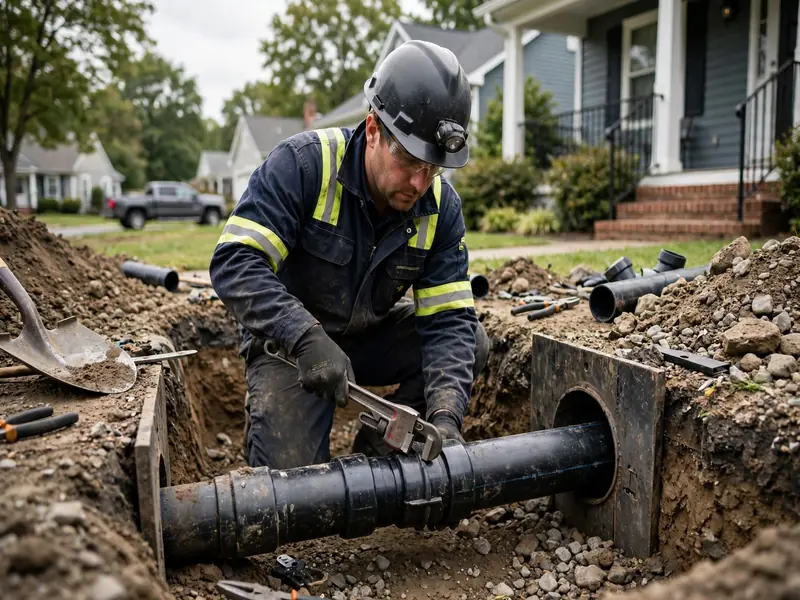
The Amboy Avenue neighborhood — Perth Amboy's Hospital and High School section — is lined with early-to-mid-20th-century single-family homes, colonials, and small multifamily buildings. Listings on the corridor show homes built in the 1920s, and area demographics put the median year built around 1953. That housing stock is exactly the age where original sewer laterals fail: clay-tile lines laid a century ago develop cracked joints and offsets, cast-iron sections scale shut, and tree roots find every gap.
When a lateral reaches that point, spot repairs stop making sense. A second clog six months after the first cleaning, sewage odors near a floor drain, or a soggy strip of lawn along the sewer path usually mean the pipe itself is finished. Our sewer line replacement service in Amboy Avenue starts with a full camera inspection of the line from your foundation to the city connection, then quotes a complete replacement — dig or trenchless pipe bursting — sized for the real conditions under your lot. One project, one new watertight line, and no more emergency calls for the same failing pipe.
When Replacement Beats Another Repair
Most Amboy Avenue service calls start as a routine clog. The difference between a cleanable line and a line that needs replacement shows up on camera: a single root ball at one joint is a repair job, but roots at every joint, bellies holding standing water, and offset or cracked tiles along most of the run mean the pipe has no sound sections left to salvage. Pouring money into repeated cleanings on a line like that is the most expensive option of all.
Age is the honest predictor here. A clay-tile lateral installed when these homes were built in the 1920s is now a century old — well past the service life of fired clay joints, which loosen as surrounding soil shifts through decades of freeze-thaw cycles. Cast-iron sections scale from the inside until the opening is a fraction of its original diameter. When your line is in that age range and problems keep recurring, replacement is not an upsell; it is the point where the math finally favors doing it once.
The telltale pattern we see across the Hospital section is unmistakable: backups that return within a year, multiple fixtures gurgling at once, and damp spots or unusually green grass along the lateral path in the yard. If two or more of those are true at your home, a camera inspection will almost certainly confirm the case for replacement rather than another temporary fix.
Open-Cut Dig or Pipe Bursting: Picking the Method for Your Lot
Amboy Avenue lots are dense and the houses sit close together, so the first question on every replacement is access. An open-cut dig excavates the full trench from foundation to curb — it handles any condition, including collapsed sections that no trenchless tool can pass through, but it means heavy equipment in the yard and a full restoration afterward. On tight lots with fences, patios, and mature plantings, that disruption matters.
Trenchless pipe bursting is the alternative most homeowners here prefer when the line qualifies. Two small pits — one at the house, one at the curb — let us pull a new continuous HDPE pipe through the path of the old clay tile, fracturing the old pipe outward as we go. The new line is jointless, which means roots have no joints to invade, and it typically installs in a fraction of the time of a full dig. Bursting works on clay tile, cast iron, and most failing materials, but it cannot pass a fully collapsed section or navigate extreme bellies without correction.
The deciding factor is always the camera survey. We measure the depth, map the bellies and offsets, and confirm the lateral's path before recommending a method. Many Amboy Avenue jobs end up as hybrids: bursting for the straight run and a short open cut at the foundation or curb where depth or obstructions demand it. Either way, you get one new watertight line end to end, not a patchwork of old and new.
What the Camera Finds in 1920s Laterals
Before any replacement quote, we run a camera the full length of the lateral and record what it sees. In this neighborhood's 1920s clay-tile lines, the footage usually tells the same story: fine root hairs at nearly every joint, several joints offset by soil settlement, and at least one section where the tile has cracked or partially collapsed. Cast-iron sections inside the foundation wall show heavy scaling — rough, rust-colored buildup that narrows the pipe and snags everything that flows through.
Depth matters as much as condition. Full basements are typical in this housing stock, which means laterals leave the foundation wall deep — often eight feet or more below grade — and slope gently toward the street connection. Deep lines complicate a dig but are ideal for pipe bursting, since the tool works along the existing grade regardless of depth. The camera survey also locates the exact connection point at the city main, which is where municipal tap rules and curb restoration requirements come into play.
We share the footage and a marked-up assessment with you before any work is scheduled. You will see exactly which sections are failing, where the new line will run, and why we are recommending one method over the other. That transparency matters on a project of this size — a sewer replacement should never be sold on a technician's word alone.
The Curb Tap and Street Restoration
The lateral doesn't end at your property line — it ends at the city main, and the connection there has to meet municipal standards. In Perth Amboy, the curb tap is permitted and inspected work: the new line is connected to the city tap with approved fittings, the connection is inspected before backfill, and the sidewalk and curb are restored to municipal spec afterward. That restoration isn't cosmetic; a settled or mismatched sidewalk section becomes a trip hazard and a township callback.
We handle the street-adjacent portion as part of the project, not as an afterthought. The excavation at the curb is shored and dewatered as the high water table demands, the tap is made with proper grade so the whole lateral drains correctly, and the concrete work — sidewalk panels, curb face — is repoured to match the existing street. Permits and inspections are coordinated so the project never stalls waiting on the city.
For homeowners, the practical point is simple: the replacement covers the full lateral, house to city main, including everything under the sidewalk. You're not left with a new line in the yard and an old connection at the curb — the most failure-prone joint in the old system is replaced along with everything else.
The New Cleanout: A Small Addition That Changes Everything
Every full lateral replacement we do in Amboy Avenue includes a new exterior cleanout — a capped access point installed in the yard, usually near the foundation, that gives direct entry to the new line. On 1920s homes where the original installation predates cleanouts entirely, this is a genuine upgrade to the property's plumbing infrastructure.
The cleanout changes how all future maintenance happens. Instead of entering the basement, pulling a toilet, or cutting into a wall to reach the line, a technician opens the cap in the yard and has straight access to the lateral. Camera inspections, preventive jetting, and any future service all start there — faster, cleaner, and cheaper than working through the house.
It's also a diagnostic asset. If a problem ever develops downstream, the cleanout lets us determine in minutes whether the issue is in the house line or the lateral — no guessing, no exploratory work. For a new HDPE lateral rated for many decades, the cleanout is the maintenance interface that protects the investment: the line itself needs little attention, but when it does, the access is already there.
Local Insight
Amboy Avenue's housing reality drives every replacement decision here. The corridor's dense stock of 1920s-era homes — the median year built sits around 1953 per area demographics — means the laterals we replace are almost always original clay tile or cast iron, now 60 to 100+ years old and well past their reliable life. That age profile is why replacements here are typically full lateral projects, house to curb, rather than spot repairs: once a century-old clay line starts failing, the failures are systemic, not isolated.
The neighborhood's low elevation — the city sits around 13 feet above sea level near Raritan Bay — adds a second factor. High groundwater is common in the urban fill soils under these blocks, and low-lying portions can sit in mapped flood zones, so excavation planning has to account for dewatering and trench shoring rather than a dry dig. Full basements are the norm in these homes, which puts laterals deep and makes trenchless pipe bursting from house to curb the practical default on tight lots where an open trench would consume the whole yard.
Finally, this is the Hospital and High School section — a busy, fully built-out corridor where parking, foot traffic, and neighboring properties are always in play. Replacement crews plan equipment staging around those constraints, keep street and sidewalk restoration to municipal spec at the curb connection, and schedule work to minimize disruption to the block.
Get Help Now
One call connects you with a local sewer professional serving Perth Amboy, NJ — day or night.
Get Help Now: (833) 713-2101Frequently Asked Questions
How do I know my Amboy Avenue lateral needs full replacement instead of a cleaning?
The camera footage decides. If inspection shows root intrusion at most joints, cracked or offset clay tiles, bellies holding water, or heavy cast-iron scaling along the majority of the run, the line is systemically failed and cleaning only buys weeks. A single root ball at one joint is a repair; damage along the whole line is a replacement.
Can trenchless pipe bursting work on my 1920s clay-tile line?
Usually yes. Bursting is designed to replace clay tile by fracturing the old pipe outward while pulling a new continuous HDPE line through the same path. It fails only when the old line is fully collapsed with no passage for the tool, or when extreme bellies need regrading. The camera survey before work confirms whether your line qualifies.
Will you have to dig up my whole yard?
With pipe bursting, no — only two small pits are excavated, at the house and at the curb. An open-cut dig does open the full trench, but we restore the yard afterward: backfill compacted in lifts, topsoil, and seeding or sod to match. The lateral path, not the entire lot, is what gets disturbed.
Does the replacement include the section under the sidewalk and curb?
Yes, the replacement runs from your foundation to the city connection, which includes the portion under the sidewalk and curb. That street-adjacent work has to meet municipal restoration standards, and we handle the permits and the curb/sidewalk restoration as part of the project.
How deep is my sewer line, and does that change the project?
Full basements are typical in this neighborhood, so laterals usually leave the foundation eight or more feet below grade. Depth raises dig costs and shoring requirements, which is one reason trenchless bursting — which works along the existing grade at any depth — is the default recommendation here when the line qualifies.
What pipe replaces the old clay line?
We install continuous HDPE pipe by bursting, or schedule-40 PVC in open-cut sections. Both are watertight and root-proof compared to the old jointed clay tile. A new exterior cleanout is typically installed at the house, giving future maintenance a direct access point without entering the basement.