Sewer Line Cleaning in Sayreville, NJ
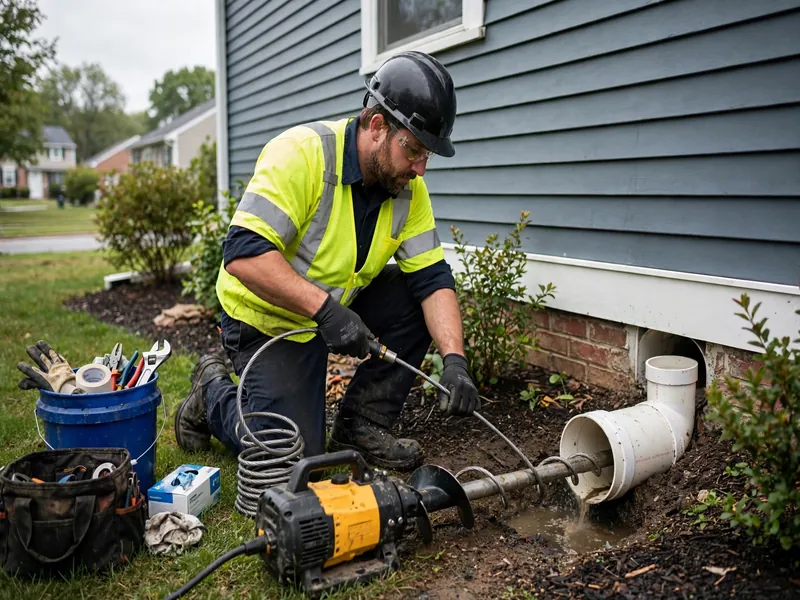
Sewer line cleaning in Sayreville, NJ centers on the Raritan River floodplain — where river flooding, not just pipe age, drives sewer work. Professional service here means post-flood silt jetting, root cutting on the brick-era and postwar clay laterals, and camera surveys that document both blockage and infiltration, because watertightness matters as much as flow in this flood-exposed borough.
Sayreville is a Middlesex County borough on the Raritan River with deep industrial roots — the Sayre & Fisher Brick Company, founded in 1850, left surviving worker housing and the landmark 1883 Reading Room — overlaid with postwar suburban build (1950s-70s capes, ranches, and splits), newer townhome developments, and the Riverton waterfront redevelopment on the former National Lead site. The sewer laterals span that history: brick-era clay tile over a century old, postwar clay, modern PVC.
Sewer line cleaning removes blockages to restore flow. In Sayreville, the dominant force is the river. The borough's documented flood exposure — after Hurricane Sandy, 250 floodplain homes were bought out with federal funding — means laterals here regularly take on river water through open joints, depositing silt and debris that becomes the primary blockage material. Cleaning is as much flood recovery as it is maintenance.
The housing layers add their own patterns. The brick-company worker homes carry century-old clay with root intrusion. The postwar stock carries mid-century clay in the root-and-belly window. The new developments carry PVC that needs only routine clearing. And the brownfield waterfront areas carry excavation complications that make thorough, dig-free cleaning especially valuable. The camera survey sorts every property into its category.
The River Is the Sewer Story
In most communities, the sewer lateral's enemies are roots, grease, and age. In Sayreville, the Raritan River belongs on that list — and for floodplain-adjacent properties, it tops it. When the river rises during hurricanes and nor'easters, water infiltrates laterals through every open clay joint, every unsealed cleanout, every foundation connection. It carries river silt, sand, and debris, and when the water recedes, the sediment remains in the pipe.
The buyout history is the evidence. After Sandy, the federal purchase of 250 floodplain homes confirmed what residents knew: the low areas flood, repeatedly and severely. For the homes that remain, the sewer lateral is on the front line of every flood — taking on water, taking on silt, and needing cleaning afterward. This is not an occasional event but a recurring operating condition.
Post-flood cleaning has its own urgency and method. The urgency is time: fresh silt flushes readily with high-volume jetting, but silt that sits for months compacts into a dense bed that resists even aggressive cleaning. The method is full-length, high-volume flushing — the sediment deposits along the entire run, not at one clog point — followed by a camera survey that assesses both the clearing and the flood's structural effects. Hydraulic pressure separates weakened joints; each flood can open new ones. The post-flood visit is cleaning plus damage assessment, and riverside properties should treat it as standard procedure after every high-water event.
Brick-Era Clay: A Century of Roots
The Sayre & Fisher worker housing — early-1900s homes from the brick company's era — sits on clay-tile laterals now over a century old. These are among the oldest residential laterals in the service area, and their condition shows it: joints opened by a hundred freeze-thaw cycles, root intrusion established over generations, segments sometimes displaced by the root masses themselves.
Cleaning these laterals is the fragile-pipe discipline. The camera survey first, grading every joint's condition. Mechanical cutting with restraint — cutters sized to clear without breaking, the operator feeling for structural limits. Jetting at controlled pressures to flush debris without stressing the pipe. Verification on camera, documenting both the successful clearing and the joints' remaining life.
For these historic homes, the cleaning visit doubles as heritage maintenance. The laterals are as old as the houses, and the camera footage is a historical document of the borough's infrastructure. Owners of brick-era homes should keep the surveys as part of the property's records — they demonstrate diligent stewardship, inform every future decision, and support the eventual replacement planning with evidence rather than guesswork. Trenchless replacement methods, when the day comes, renew these historic laterals without the disruption of open-trench digging.
Postwar Stock: The Standard Clay Program
Sayreville's postwar suburbs — the 1950s-to-1970s capes, ranches, and splits — carry mid-century clay-tile laterals now fifty to seventy-five years old. These lines are in the classic maintenance window: joints opened enough for steady root intrusion, trench settlement creating sediment-trapping bellies, decades of household grease and scale layered through.
The cleaning program is the established mid-century protocol: full camera survey, mechanical root cutting joint by joint, hydro jetting to flush bellies and scour grease, verification camera to close the visit. Thoroughly done, it restores years of reliable flow — the pipe is aging but typically still structurally sound, and maintenance cleaning is the economical path.
What distinguishes Sayreville's postwar stock is the flood overlay. Even a well-maintained mid-century lateral takes on silt during river flooding, so the maintenance rhythm here includes post-flood assessment as a matter of course. The baseline schedule — typically cutting every one to two years for root-prone lines — gets supplemented by event-driven cleanings after high water. Homeowners near the river should think of it as two calendars: the maintenance calendar and the river's calendar, with the latter occasionally overriding the former.
Watertightness as a Cleaning Goal
In most sewer work, the goal is flow: clear the blockage, restore drainage. In Sayreville's floodplain, there is a second goal — watertightness — because a lateral that flows fine in dry weather but admits river water through open joints is a lateral that will keep filling with silt. The camera survey is the instrument that measures both.
During the survey, the technician watches for infiltration: water visibly entering at joints, silt deltas fanned below each entry point, the telltale signs of a pipe that breathes with the water table. Light infiltration — a seep at a few joints — is a maintenance item; the silt it deposits gets jetted on schedule. Heavy infiltration — water streaming in at many joints, the line refilling with sediment after every storm — means the joints are failing as seals, and cleaning alone cannot keep up.
This is the decision the footage supports. A lateral with manageable infiltration stays on the maintenance program: cut, jet, verify, repeat. A lateral where infiltration dominates becomes a candidate for sealing or replacement with watertight pipe — the only approaches that address the water rather than its deposits. In a borough where the river is a permanent neighbor, watertightness is not a luxury upgrade. It is the difference between maintaining a sewer and bailing one.
Brownfield Waterfront and Dig-Free Cleaning
Sayreville's Riverton waterfront redevelopment sits on the former National Lead site — brownfield ground with remediation oversight — and the borough's industrial history touches other parcels as well. Where excavation encounters remediation zones, contaminated soils, or deep legacy infrastructure, digging becomes complicated, regulated, and expensive.
This makes thorough, excavation-free cleaning exceptionally valuable on affected parcels. Every blockage fully resolved with cutter, jetter, and camera is one that does not trigger the complications of breaking ground in regulated soil. The cleaning visit should be comprehensive by design: the full sequence, verified on camera, documented completely — because the cost of an incomplete cleaning that leads to excavation is multiplied by the ground's complexity.
Property owners and managers near the redevelopment areas should communicate the site's history to the technician before work begins. Most cleanings are routine — the same roots, grease, and silt as anywhere — but the background knowledge shapes the planning: utility clearance awareness, documentation discipline, and a strong preference for methods that keep the work above ground. The camera survey's mapping of the lateral's path and depth is essential documentation for any future work on these parcels.
Two Calendars: Maintenance and the River
Sayreville homeowners — especially near the river — live by two calendars. The maintenance calendar is the predictable one: root cutting every one to two years for clay laterals, jetting on the interval the camera recommends, the spring visit clearing new growth, all scheduled in advance like any home maintenance. It keeps the line ahead of the gradual processes: root regrowth, grease accumulation, sediment settling.
The river's calendar is the unpredictable one: hurricanes, nor'easters, heavy-rain events that raise the Raritan and push water into the system. After each significant high-water event, the protocol is check and clean — watch drainage speed, and if it has slowed, schedule prompt high-volume jetting before the silt compacts. The camera survey in the same visit checks for new joint damage, because each flood can open what the last one weakened.
The household's standing habits support both calendars: grease in the trash, wipes never flushed, cleanout caps sealed, area drains clear, no aggressive-rooted trees near the lateral. And the standing record — every visit's footage kept on file — turns both calendars into a single documented history. In a borough where the river writes part of the sewer story, that history is the owner's control over the narrative.
Local Insight
Sayreville's sewer cleaning reality is defined first and last by the Raritan River. The borough's documented flood exposure — most starkly the post-Sandy buyout of 250 floodplain homes — means laterals here take on river water and silt as a recurring condition, not a rare event. Cleaning is therefore flood recovery as much as maintenance: prompt, high-volume, full-length jetting after high-water events, before silt compacts, paired with camera surveys that assess both the clearing and the flood's structural damage. Watertightness joins flow as a cleaning goal, because a lateral that admits the river will never stay clear.
The second defining factor is the housing history. Brick-company worker homes from the early 1900s carry century-old clay laterals needing the fragile-pipe protocol; the 1950s-70s postwar stock follows the standard mid-century maintenance program with a flood overlay; modern developments on PVC need only routine clearing. The camera survey's first job is historical: placing each lateral in its era.
The third factor is the industrial waterfront. Brownfield ground with remediation oversight — notably the former National Lead site — makes excavation complicated, which makes comprehensive, dig-free cleaning disproportionately valuable. Across Sayreville, the approach is consistent: respect the river's calendar alongside the maintenance calendar, clean thoroughly enough to avoid digging, document everything, and let the camera footage decide when maintenance gives way to watertight replacement.
Book Service
One call connects you with a local sewer professional serving Perth Amboy, NJ — day or night.
Book Service: (833) 713-2101Frequently Asked Questions
How soon after a flood should my sewer line be cleaned?
As soon as practical once the property is safe and accessible. Fresh flood silt flushes out readily with high-volume jetting; silt that sits for weeks compacts into a dense bed that resists even aggressive cleaning. Include a camera survey in the same visit — flood pressure can separate weakened joints, and you need to know what the water did to the pipe, not just what it left inside.
My home is in the floodplain. Will cleaning stop the storm backups?
Cleaning restores the line's full capacity, which often stops the backups — a clear line handles infiltration far better than a narrowed one. But if the camera shows heavy infiltration through open joints, each flood will redeposit silt and the problem recurs. The complete answer for floodplain laterals is cleaning plus a plan for watertight joints or replacement — flow restoration now, water exclusion for the long term.
What is different about cleaning a hundred-year-old lateral?
Restraint. The camera grades every joint's condition first; cutters are sized to clear without breaking fragile joints; jetting pressure is controlled for century-old pipe; and the verification camera confirms the pipe survived the work. The goal is the maximum safe clearing. If the camera shows the pipe is structurally failing, the honest recommendation is replacement — often by trenchless methods — rather than another cleaning.
How often should my postwar Sayreville lateral be serviced?
Typically every one to two years for root-prone clay — cutting in spring, jetting as needed — plus event-driven cleanings after significant floods. The camera footage from each visit sets the interval: stable joints hold the schedule, and the silt depth after storms shows whether infiltration is accelerating. Near the river, think of it as two schedules: maintenance and post-flood.
Does the brownfield history affect my sewer cleaning?
The cleaning itself is the same — roots, grease, and silt do not care about the ground's history. What changes is the value of avoiding excavation: on parcels with remediation oversight or legacy industrial soils, digging is complicated and regulated, so thorough dig-free cleaning that keeps the lateral functional is especially worthwhile. Share the site's history with the technician before work begins.
What can I do to protect my lateral between floods?
Keep grease out of the sink, never flush wipes, keep cleanout caps sealed and area drains clear, and maintain the scheduled cleaning rhythm so the line enters storm season at full capacity. After high water, watch drainage speed and act promptly if it slows. Consistent habits plus prompt post-flood response keep a floodplain lateral reliable.