Trenchless Pipe Lining in Rahway, NJ
Pipe lining rehabilitates Rahway's clay and cast-iron laterals — from Revolutionary-era downtown blocks to 1950s tracts — without excavation. A resin liner cures inside the old pipe into a jointless new wall that seals root intrusion and cracked joints. In dense downtown blocks with shared party lines and tight access, lining's access-point installation is often the only practical rehabilitation method.
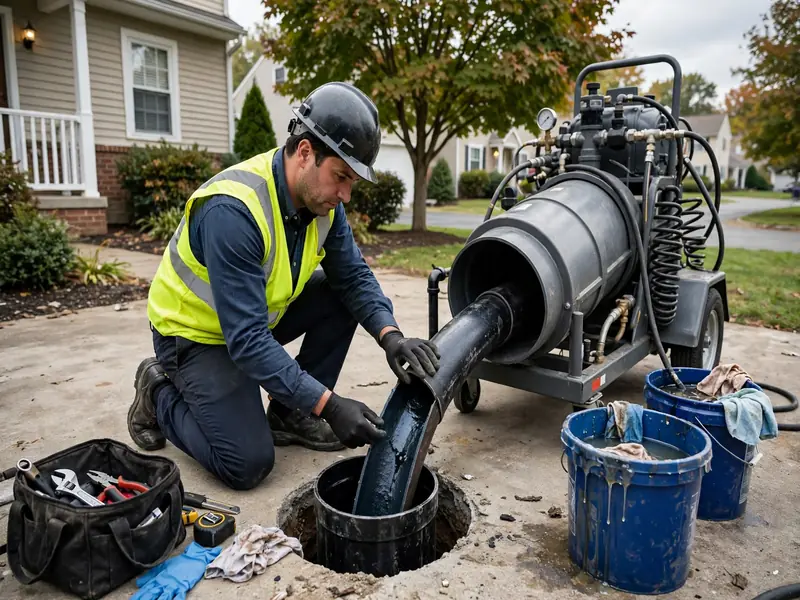
Rahway's history runs from Revolutionary-era "Spanktown" to a modern arts-district city, and its sewers span that entire arc: century-old clay and cast iron in the downtown blocks near Main Street, 1950s clay tile in the mid-century tracts, PVC in the newest condos. Each era's pipe fails in its own way, and each gets its own verdict from the camera.
Trenchless pipe lining — cured-in-place pipe (CIPP) — rehabilitates these lines from the inside. A resin-saturated liner is installed through an access point and cured into a hard, jointless new pipe wall. Roots lose their entry points, cracks get bridged, corroded iron gets a new interior — and the surface above, whether a downtown sidewalk or a suburban lawn, stays undisturbed.
Downtown Rahway adds the access and configuration factors: tight blocks, possible shared party lines between older buildings, and the Rahway River's floodplain pockets. This page explains the method across Rahway's eras, the downtown-specific considerations, and the honest limits.
From Spanktown to Suburb: Rahway's Pipe Eras
Downtown Rahway's oldest blocks — the historic homes near the Merchants and Drovers Tavern area, the dense early-1900s colonials — carry clay-tile and cast-iron laterals 80 to 120 years old. These are the city's most deteriorated residential sewers: joints separated across the run, heavy root colonization, cracked sections, corroded iron. Where the pipe remains continuous, lining rehabilitates it; where it has failed structurally, the footage says so.
The mid-century tracts — typical build year around 1950 — carry clay tile at 70-plus years with the era's standard pattern: joint failure advancing, roots established, segments sound. Possible Orangeburg in 1950s tracts is the material exception the camera must rule out. These tracts are lining's core demographic: developed defects, preserved structure, permanent fix in one trenchless project.
Newer arts-district apartments and condos run on PVC that rarely needs rehabilitation. Their lateral issues are blockages and usage patterns, not material aging. Proposing lining for sound PVC would be selling, not diagnosing — the inspection reports sound pipe honestly and no work is recommended.
The Rahway River threads through the city, and floodplain pockets near the river add infiltration pressure to defective laterals during high-water events. Lining's watertight seal addresses that infiltration — a genuine secondary benefit for river-adjacent blocks, on top of the structural rehabilitation every era's clay needs.
Downtown Blocks: Access, Party Lines, and Tight Quarters
Rahway's dense older blocks near Main Street present the tight-access picture: buildings close together, minimal yards, laterals running under sidewalks and narrow passages. Open-cut excavation here faces the familiar urban obstacles — no equipment staging, right-of-way crossings, disruption to neighboring properties and businesses. Lining's access-point installation bypasses all of it.
Shared or party-line configurations are a documented possibility in the oldest downtown blocks. Adjacent buildings from the same era sometimes share a connection to the main, or laterals interconnect in undocumented ways. Lining one side of a shared configuration without mapping the whole creates incomplete repairs and neighbor disputes. The camera inspection — sometimes with dye testing — traces exactly which pipe serves the property before any plan is drawn.
Where a shared line is confirmed, the repair becomes a coordination effort, and lining's minimal disruption is a negotiating asset. A one-day trenchless rehabilitation is an easier agreement among property owners than a trench crossing multiple lots. The method does not solve the coordination problem, but it minimizes what needs coordinating.
Tight quarters also mean short lateral runs — and short runs line efficiently. Less liner, shorter cure, single installation covering house to main. The downtown lateral that looks most intimidating from the surface is often the quickest lining project underground, because the pipe is short and the access point serves the whole run.
How the Liner Renews Clay and Iron
The process is material-agnostic at installation but material-specific in preparation. For Rahway's clay laterals — downtown century-old or mid-century tract — preparation means mechanical root cutting joint by joint, then high-pressure jetting to scour the walls. The post-cleaning camera pass reveals the pipe's structural truth with roots gone, and the liner measurement is finalized from that clean footage.
For cast-iron sections — common in the oldest downtown buildings — preparation adds descaling: mechanical chain-flail or abrasive jetting under camera guidance, stripping corrosion scale until sound metal shows. The liner bonds to cleaned metal, not to scale; skipping descaling compromises the installation. The technician judges the iron's remaining wall from live footage — sound iron lines, perforated iron does not.
Installation itself is the standard CIPP sequence: the resin-saturated liner, cut to the measured length, goes in through the access point by inversion or pull-in, seats under air or water pressure against the host interior, and cures over several hours with the lateral out of service. The resin system — hot water, steam, or ambient cure — is matched to the run's length and conditions.
The finished liner is a structural, jointless, corrosion-proof pipe formed inside the old one. Clay's failed joints are replaced by continuous wall; iron's corroded interior is replaced by smooth epoxy. Flow improves, roots are permanently excluded, infiltration is sealed. The surface above — downtown sidewalk or suburban lawn — never knows the work happened.
The Rahway River Factor: Infiltration Near the Floodplain
The Rahway River drains the city, and floodplain pockets near the river expose laterals to elevated groundwater and periodic high water. Defective clay joints admit that water as infiltration — the lateral fills with groundwater during wet periods, surcharging the system and contributing to backups. It is the same tidal-infiltration mechanism waterfront towns face, driven here by river hydrology.
A cured-in-place liner seals the infiltration pathway with a watertight, jointless interior. Where the old clay admitted water through dozens of joints, the lined pipe admits none. During high-water events, the lateral carries its design flow instead of filling with infiltration — preserving drainage function when the river stresses the system most.
The inspection documents infiltration as part of the baseline: active water entry through joints shows on camera as weeping or flowing at defects, particularly after rain. That footage establishes that the watertight liner targets an observed problem. Post-lining wet-weather behavior is the real-world verification.
This does not make lining flood protection. Surface flooding, overwhelmed municipal mains, and groundwater around foundations are system-level conditions beyond any lateral. But the lateral's own infiltration — the portion the property owner controls — is eliminated, and for river-adjacent Rahway blocks that portion is meaningful.
Symptoms Across the Eras
Downtown's oldest buildings show the advanced symptom set: recurring backups, persistent slow drainage across fixtures, sewage odors from long-failed joints. On 100-year-old clay, these symptoms reflect end-stage joint failure — the pipe has been deteriorating for decades and the defects are comprehensive. The inspection usually confirms extensive but lineable damage, unless structural failure has set in.
Mid-century tracts show the developing set: multiple fixtures slowing together, backups returning months after clearing, wet-weather worsening from infiltration. On 70-year-old clay, these are the peak-failure symptoms — joints open enough for thorough root colonization, segments still sound. Two clearing cycles is the practical threshold where lining becomes the rational permanent fix.
Newer condos and apartments show the usage set: blockages from heavy multi-unit flows, grease accumulation, foreign objects. These are maintenance issues, not pipe failures — jetting and proper use resolve them, and lining is not indicated. The inspection distinguishes usage blockages from structural defects so the response matches the cause.
Across all eras, the age-based inspection argument holds: a Rahway home with an original lateral and no camera history carries unknown risk. Finding a lineable pipe early preserves the trenchless option; emergency discovery during a backup removes choices. The footage is cheap insurance against expensive surprises.
Limits and the Honest No
Collapse disqualifies everywhere: where clay has caved or iron has fully failed, no liner follows. Downtown's oldest lines collapse sometimes — under streets, at deep sections — and the camera marks these precisely for bursting or excavation. A collapsed downtown lateral is a bigger project for its location, which is one more reason to inspect before collapse rather than after.
Bellies disqualify by geometry: the liner preserves the pipe's shape, so settled low spots remain low, ponding water after lining as before. The camera's waterline view shows bellies plainly; they need regrading. Floodplain-adjacent blocks deserve careful belly screening, since saturated soils settle.
Major offsets defeat lining where joints have sheared into large steps — a real risk after a century of frost heave downtown. Minor offsets bridge fine; the footage measures each step against the pipe diameter.
Orangeburg in 1950s tracts, where present, is a material disqualification — deformed fiber pipe cannot host a liner. And shared-line configurations are a scope limit, not a method limit: the mapping must precede the plan. The honest no — "this pipe cannot be lined, and here is the footage showing why" — is the most valuable thing a contractor can deliver, because it prevents spending lining money on the wrong repair.
Local Insight
Rahway's lining candidacy is shaped by three card facts. First, the era span: Revolutionary-era downtown roots with early-1900s clay and iron at 80-120 years, mid-century tracts at 70-plus years with possible Orangeburg, and new PVC condos — a per-lateral candidacy model where the camera assigns each property its material and verdict. Lining serves the clay majority across eras; the inspection keeps the exceptions honest.
Second, the downtown configuration: dense older blocks near Main Street with tight access and possible shared party lines between buildings. Lining's access-point installation is often the only practical rehabilitation method where excavation cannot go, and its minimal disruption eases the coordination that shared lines require. The inspection maps both the pipe's condition and its configuration before any plan.
Third, the river: Rahway River floodplain pockets where high water drives infiltration through defective joints. Lining's watertight, jointless seal is infiltration defense matched to the river's pressure — a secondary benefit on top of the structural rehabilitation. For Rahway, the method fits the pipe's era, the downtown's constraints, and the river's hydrology together.
Schedule Your Visit
One call connects you with a local sewer professional serving Perth Amboy, NJ — day or night.
Schedule Your Visit: (833) 713-2101Frequently Asked Questions
Our downtown building might share a sewer line. How is that handled?
The camera inspection maps the configuration first — tracing which fixtures drain to which pipe and identifying any shared or interconnected sections, sometimes with dye testing for confirmation. If the line is shared, all connected property owners coordinate on the repair, since lining affects the common pipe. Lining's one-day, no-dig footprint makes that coordination easier than any excavation option. No lining plan proceeds until the mapping shows exactly what serves your building.
Is our 1950s tract at risk of having Orangeburg pipe?
Some 1950s tracts used Orangeburg, so the possibility is real and the camera is the only way to rule it out. Orangeburg shows on camera as a dark, deformed fiber tube — visibly oval or flattened — utterly different from clay's rigid segments. If the footage shows clay, lining proceeds normally; if it shows Orangeburg, the recommendation shifts to replacement by bursting or excavation. Material identification is the inspection's highest-value finding on a 1950s lateral.
Will lining help with backups during heavy rain near the river?
If infiltration through your lateral's defective joints contributes — groundwater entering the pipe during wet weather and surcharging it — lining's watertight seal directly reduces that load, and river-adjacent blocks often see marked improvement. But heavy-rain backups can also come from a surcharged municipal main or surface flooding, which lining does not address. The inspection documents whether your lateral shows active infiltration so the fix matches the actual source.
Our condo building is only 15 years old. Could the lateral need lining?
Very unlikely. Fifteen-year-old PVC laterals are nowhere near material failure; their issues are blockages, grease, or usage patterns — maintenance matters, not rehabilitation. A camera inspection would almost certainly report sound pipe, and no reputable contractor proposes lining on that footage. If your building has recurring backups, the answer is thorough cleaning and usage review, not trenchless rehabilitation of a pipe that does not need it.
How disruptive is lining for a building with ground-floor retail?
Minimally. The work happens through an access point with a small equipment footprint — no trench across your frontage, no torn-up sidewalk. The lateral is out of service only during the resin cure, several hours, which can often be scheduled during off-hours. Compared with open-cut excavation, which would close your frontage for days, lining keeps the business operating with a brief, coordinated plumbing pause.
What does descaling involve for our old cast-iron sections?
Descaling strips the corrosion scale that builds up inside aging cast iron, because the liner must bond to sound metal, not loose scale. Mechanical chain-flail heads or abrasive jetting work through the pipe under camera guidance until the pitted-but-solid iron wall shows. The technician judges wall condition live — sound iron proceeds to lining, perforated iron does not. It is a mandatory preparation step for iron, not an optional extra, and the camera footage documents it.