Trenchless Pipe Lining in Harbortown, NJ
Pipe lining in Harbortown is a targeted tool, not a default: this 1999 waterfront townhome community runs on PVC laterals that rarely need rehabilitation. Lining earns its place for the exceptions — settled joints, root intrusion at connections, or isolated defective sections — sealing them without disturbing slab foundations, shared walls, or the community's finished streetscapes.
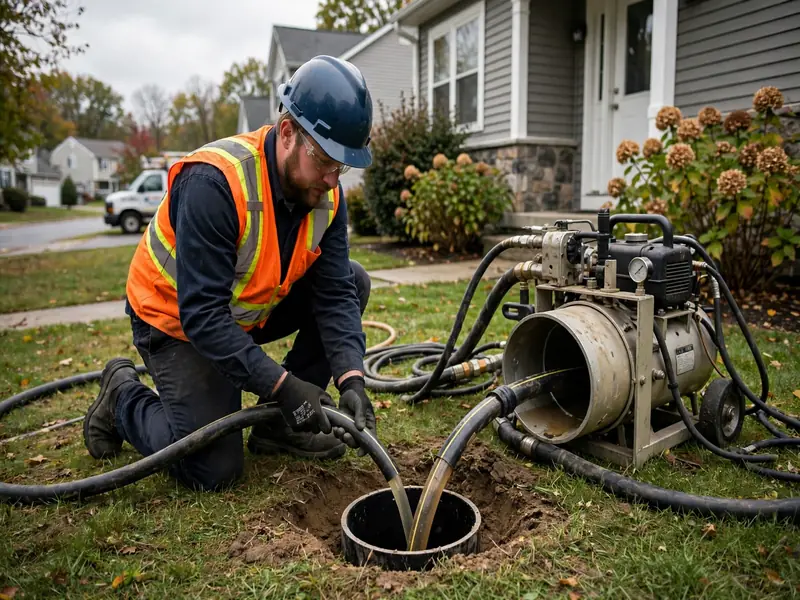
Harbortown is the exception in Perth Amboy's sewer landscape. Where most of the city's neighborhoods run on clay tile and cast iron at 60 to 100 years old, Harbortown's townhomes went up in 1999 with PVC drainage and PVC laterals. Plastic pipe does not corrode, does not develop joint failure on clay's timeline, and at 25-plus years old is nowhere near material exhaustion.
So pipe lining — cured-in-place pipe (CIPP) — plays a different role here. It is not the neighborhood-wide rehabilitation method; it is the precision tool for the exceptions. A settled joint admitting roots. A separated connection. An isolated defective section in an otherwise sound PVC run. Where those occur, lining seals the defect trenchlessly — which matters enormously in a community of slab-on-grade townhomes with shared walls, where excavation is disruptive and access is constrained.
This page explains when lining makes sense in a PVC-era community, how the inspection finds the exceptions, and why the method's minimal footprint fits Harbortown's built form.
PVC at 25 Years: Why Lining Is the Exception, Not the Rule
PVC sewer pipe has a fundamentally different aging curve than clay or iron. It does not corrode, scale, or tuberculate. Its joints are solvent-welded or gasketed, not the bell-and-spigot connections that separate over decades. At 25-plus years, a properly installed PVC lateral is barely into its service life — the material is specified for many decades, and Harbortown's installations have not had time to develop material-driven failure.
That does not mean Harbortown laterals never have problems. They do — but the problems are installation and site issues, not material aging. Settlement in waterfront fill soils can stress joints. Root intrusion can exploit a separated connection. Construction defects — a poorly bedded section, a misaligned joint — can manifest years later. These are localized defects in an otherwise sound pipe, which is a different diagnostic picture than a clay lateral failing along its full length.
Lining fits this picture as a sectional repair. Where the camera finds an isolated defective joint or a short damaged section, a sectional liner seals it without rehabilitating pipe that does not need it. Full-length lining of a sound PVC lateral would be unnecessary work — the honest assessment says so, and the inspection footage backs it.
The key discipline in Harbortown is resisting the neighborhood-wide logic that applies elsewhere. In clay neighborhoods, age alone justifies inspection and often rehabilitation. Here, symptoms justify inspection, and only confirmed defects justify lining. The camera is the gatekeeper, and most of the time it reports a sound pipe.
Settlement, Joints, and Waterfront Fill
Harbortown sits on redeveloped waterfront — fill soils at low elevation near the Arthur Kill and Raritan Bay, with a high water table. Fill settles, and settlement stresses buried pipe. For PVC laterals, the stress concentrates at joints: a settling section can pull a joint apart or create a low spot, and either defect admits the problems lining is designed to seal.
A separated PVC joint behaves like a failed clay joint — roots enter, soil can migrate, infiltration follows. The difference is that the rest of the PVC run is typically sound, so the repair is sectional rather than full-length. A short liner spanning the separated joint restores the watertight, jointless connection without touching the healthy pipe on either side.
Bellies from settlement are the defect lining cannot fix, and waterfront fill makes them worth watching for. A liner conforms to the pipe's shape, so a settled sag remains a sag after lining. The camera's waterline view distinguishes a separated joint (lineable) from a bellied section (not lineable) — the footage shows whether water ponds in a low spot or flows through a gapped joint.
High groundwater adds a practical note: any excavation in Harbortown means dewatering, which makes lining's no-dig installation comparatively more attractive even for small repairs. Sealing a defective joint trenchlessly avoids opening saturated fill — a meaningful advantage on this waterfront site.
Slab Foundations and the Access Question
Harbortown's townhomes sit on slab-on-grade or garage-level foundations, which changes how sewer work is accessed. There is no basement cleanout inside the house; the lateral exits beneath the slab and runs to the municipal connection. Locating the line and establishing camera access takes planning — the access point is typically an exterior cleanout, and where none exists or it is buried, the crew establishes one.
This limited subfloor access is another reason trenchless methods fit Harbortown. Excavating a lateral beneath or adjacent to a slab foundation is delicate, disruptive work with structural implications. Lining through an exterior access point rehabilitates the pipe without approaching the slab at all. The foundation is never undermined, never cut, never disturbed.
Interior drain issues in slab homes follow a different path: problems under the slab — a broken drain line beneath the concrete — are not lateral-lining candidates in the usual sense, though sectional lining techniques can sometimes rehabilitate under-slab pipe through interior access. The inspection distinguishes under-slab interior drainage from the exterior lateral, and each gets its own repair plan.
For townhome owners, the practical takeaway is that exterior lateral issues are highly treatable trenchlessly, while any suspected under-slab problem needs its own camera diagnosis before anyone proposes a method. The two zones — under the slab and beyond it — are different pipes with different options.
What the Inspection Looks For in a PVC Community
The Harbortown camera inspection is a defect hunt, not an age assessment. The technician runs the full lateral looking for the specific failure modes PVC develops: separated joints, root intrusion at connections, settlement-induced bellies, and construction defects like misaligned joints or damaged sections. Most inspections find a sound pipe — and reporting that honestly is the job.
Root intrusion, when found, concentrates at the separated joint or connection — not distributed along the run the way clay shows it. The footage pinpoints the entry: a single joint with a root mass, while the pipe on either side is clean and round. That localization is what makes sectional lining the right response rather than full-length rehabilitation.
The inspection also verifies the connection at the municipal main, a common trouble spot where the lateral meets the city's pipe. Differential settlement between the two can open the connection joint, admitting roots and infiltration. A sectional liner spanning the connection seals it — one of lining's most useful applications in a PVC community.
Diameter and length get confirmed as a matter of course, and the footage becomes the property's baseline record. In a community where most laterals are sound, that baseline has lasting value: any future symptom can be compared against the original inspection to see what changed.
Sectional Lining: The Precision Repair
Sectional — or spot — lining applies the CIPP principle to a short, defined defect: a single separated joint, a cracked section, a bad connection. A short liner, typically a few feet long, is positioned exactly over the defect, inflated, and cured. The result is a jointless, watertight repair at the defect location, with the sound pipe on either side untouched.
The precision matters for both cost and disruption. A sectional liner uses a fraction of the material of a full-length installation, installs faster, and cures quicker. The access requirement is the same — a cleanout or small pit — but the overall project is smaller in every dimension. For the isolated defects Harbortown's PVC develops, it is the proportionate response.
Installation follows the same quality sequence as full-length lining: clean the section, verify with camera, install the liner, cure, verify again. The post-installation footage shows the defect sealed — the separated joint bridged, the crack covered — with smooth transitions to the original pipe on both sides. There is no step or restriction at the repair.
Sectional lining is not a compromise or a shortcut; it is the correct scope for a localized defect. Lining an entire sound lateral to fix one bad joint would be unnecessary work. The inspection defines the defect's extent, and the liner matches it — no more, no less.
When Harbortown Laterals Need More Than Lining
Bellies from settlement are the primary non-lining defect in this community. Waterfront fill settles unevenly, and a PVC section that has sagged into a permanent low spot will hold water regardless of any liner installed over it. The camera shows the ponding clearly. Bellied sections need regrading — excavation or bursting — because only changing the pipe's grade fixes a grade problem.
Severely separated or collapsed sections can exceed what a sectional liner bridges. A joint pulled far apart, or a section crushed by settlement or surface loading, may need excavation and replacement of that segment. The footage measures the defect; the technician judges whether a liner can span it cleanly.
Under-slab interior problems are a separate domain. A broken drain line beneath the townhome's slab foundation is not reached by lateral lining from an exterior cleanout — it needs its own access and its own repair plan, which may involve interior sectional lining techniques or targeted slab work. The inspection must first establish which side of the foundation wall the problem is on.
And the honest baseline: most Harbortown laterals need nothing at all. A sound 25-year-old PVC lateral with no defects is not a lining candidate, a bursting candidate, or an excavation candidate — it is a pipe with decades of service ahead. The inspection that reports "no defects found" is a successful inspection, and no reputable contractor proposes work on that footage.
Local Insight
Harbortown's lining picture inverts the usual logic, per three card facts. First, the construction era: townhomes built in 1999 with PVC/ABS drainage and PVC laterals — pipe material that is sound at 25-plus years, with failures tending toward joint issues, settlement, or blockages rather than corrosion. Lining here is a precision tool for confirmed defects, not a neighborhood-wide rehabilitation method; most inspections should report sound pipe.
Second, the waterfront site: low elevation near the Arthur Kill and Raritan Bay on redeveloped fill soils with a likely high water table. Fill settlement is the main threat to these PVC laterals — stressing joints and creating bellies — and the high water table makes any excavation a dewatering operation. Trenchless sectional lining avoids opening saturated fill, which is a practical advantage even for small repairs.
Third, the built form: slab-on-grade townhomes with shared walls and limited subfloor access, in a finished community where excavation disrupts streetscapes and neighbors. Lining's access-point installation fits this form precisely — exterior cleanout access, no slab disturbance, no trench through the community. For Harbortown, the lining conversation starts with "is there a confirmed defect?" and only then proceeds to method.
Schedule Your Visit
One call connects you with a local sewer professional serving Perth Amboy, NJ — day or night.
Schedule Your Visit: (833) 713-2101Frequently Asked Questions
Our Harbortown townhome was built in 1999. Could the sewer lateral really need work?
The pipe material itself — PVC — should be sound at this age, but installation and site issues can still cause problems: settlement in fill soils separating a joint, root intrusion at a connection, or a construction defect manifesting late. Symptoms like recurring slow drains or backups justify a camera inspection, which in most Harbortown cases reports a sound pipe. Only confirmed defects warrant repair; the inspection distinguishes real problems from worry.
What is sectional lining, and when is it used?
Sectional lining rehabilitates a short, defined defect — a separated joint, a cracked section, a bad connection — with a liner just a few feet long, rather than lining the entire lateral. It is the proportionate repair for the isolated defects PVC communities develop: the rest of the sound pipe is left alone. The camera pinpoints the defect's location and extent, and the sectional liner seals exactly that spot with a jointless, watertight repair.
Can lining fix a belly caused by settlement?
No. A belly is a sagging section holding standing water, and a liner conforms to the pipe's existing shape — the sag remains after lining. In Harbortown's fill soils, settlement bellies are the defect to watch for, and the camera's waterline view identifies them clearly. A bellied section needs regrading by excavation or pipe bursting. Any proposal to line a bellied section should be questioned, because the geometry cannot be fixed from inside.
Will sewer work damage our slab foundation?
Trenchless lateral lining does not touch the foundation — the work happens through an exterior access point in the buried lateral beyond the slab. That is one of its main advantages for slab-on-grade townhomes: no excavation near or under the foundation, no undermining, no structural risk. Suspected problems beneath the slab itself are a separate matter requiring their own diagnosis, but exterior lateral lining leaves the slab completely undisturbed.
Do we need permission from the HOA for lateral lining?
Most townhome communities require HOA notification or approval for exterior work, even trenchless work with minimal footprint. Check your community's alteration and maintenance rules before scheduling — the lateral serving your unit may be your responsibility, HOA responsibility, or shared, depending on the declarations. Clarifying responsibility and approvals upfront avoids disputes, especially where laterals run through common areas.
How do tree roots get into a PVC sewer line?
Through separated joints or connections, not through the pipe wall. Intact PVC with sound joints resists roots well, but if settlement or ground movement opens a joint, roots exploit the gap exactly as they do in clay — they follow moisture to the opening and grow in. The camera shows the entry point precisely: typically a single joint with a root mass while the surrounding pipe is clean. A sectional liner sealing that joint permanently closes the entry.