Trenchless Pipe Lining in Avenel, NJ
Pipe lining lets Avenel homeowners rehabilitate aging sewer laterals without excavating the yard. A resin-soaked liner is placed inside the clay or cast-iron pipe and hardened into a seamless new wall. It seals cracked joints, locks out tree roots, and restores smooth flow — ideal for mid-century colonials and Capes whose original laterals are now 50 to 80 years old.
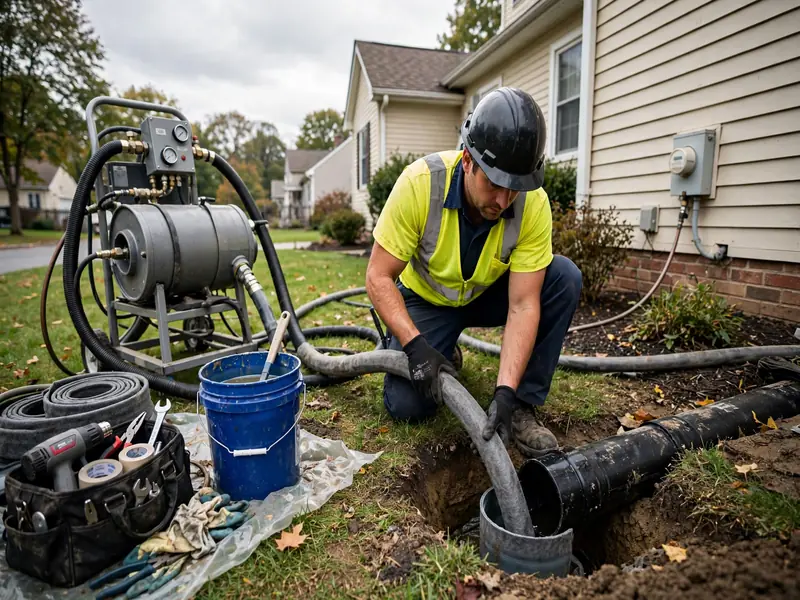
Avenel's neighborhoods grew up in the middle of the 20th century, and so did their sewers. The colonials, Cape Cods, and ranch homes that define this Woodbridge Township community were built mostly between the 1940s and 1970s, and their sewer laterals went in with them — clay tile for the earlier tracts, transitioning toward early PVC in the later ones. The oldest of those clay lines are now pushing 80 years of service.
Trenchless pipe lining — cured-in-place pipe, or CIPP — was practically designed for this situation. Instead of digging up the lateral, a crew installs a resin-saturated liner inside the old pipe through an existing access point. The resin cures into a hard, jointless tube that becomes the new interior of the sewer line. Cracks get bridged, separated joints get sealed, and roots lose the gaps they have been exploiting for decades.
Not every Avenel lateral qualifies, and the honest answer depends on what a camera inspection finds. This page walks through how lining works, which Avenel homes are the strongest candidates, what the process looks like day to day, and when a different repair method is the better call.
The Clay-to-PVC Transition Era and What It Means for Lining
Avenel's housing sits in a material transition zone. Homes from the 1940s through the early 1960s almost certainly have clay-tile laterals. By the late 1960s and 1970s, builders were switching to early PVC. That means two Avenel houses on the same street can have completely different lateral materials — and completely different repair prospects.
Clay tile is lining's ideal host. It fails predictably: joints separate, roots enter, sections crack, but the pipe usually keeps its round shape for a very long time. A liner spans those defects and creates a new continuous interior. The inspection typically shows a pipe that looks rough on camera but is structurally continuous — exactly what lining needs.
Early PVC is a different story. PVC does not corrode or invite roots at joints the way clay does, but early installations can suffer from settlement, bellies, and separated solvent joints. A belly — a sagging section that holds standing water — will not be fixed by a liner, because the liner conforms to the sag. PVC laterals with isolated joint separations can sometimes be lined, but bellied or badly settled runs usually need a different approach.
This is why Avenel jobs start with verifying the material. The camera shows it clearly: clay's segmented bells, cast iron's rough scale, or PVC's smooth plastic. The material and its failure mode determine whether lining is a strong option, a maybe, or off the table.
Roots, Joints, and the Case for a Jointless Pipe
In Avenel's mid-century subdivisions, the number-one lateral problem is root intrusion through clay joints. Mature street trees and yard trees have had 50-plus years to find these lines. A clay lateral has a joint every few feet, and each joint is a potential entry point. Once roots get in, they expand with every growing season, forming dense mats that snag solids and slow drainage.
Mechanical root cutting is the common first response, and it works — temporarily. The cutter clears the mass, flow returns, and everyone moves on. But the joints remain open, so the roots return, often within a year or two. Homeowners in this cycle sometimes have their line cleared annually without ever addressing the underlying openings.
Pipe lining breaks the cycle by removing the openings. The cured liner is a single continuous surface with no joints at all across the lined run. Roots cannot penetrate cured epoxy resin, and with no gaps to exploit, they stay outside the pipe where they belong. For a homeowner tired of yearly clearing visits, that permanence is the core value proposition.
There is a caveat worth stating plainly: lining seals the joints it covers. If the inspection shows the lateral's far end near the municipal main is also root-damaged, lining only the house-side portion leaves a future problem at the far end. A full lateral lining — from the house to the connection — is the complete solution when the whole run shows joint deterioration.
What Happens on Lining Day
The job begins with verification, not installation. A camera run documents the lateral's full length, diameter, material, and defect locations. Measurements from this footage determine the liner's exact length — it must span from the access point to the municipal connection without falling short or bunching. Access is confirmed too: most Avenel homes have a cleanout, and where one is missing or buried, the crew establishes an access point before lining day.
Cleaning comes next and it is not a quick rinse. Root masses get cut mechanically, then high-pressure jetting scours the pipe walls. On clay laterals this step is straightforward; on cast-iron sections it removes the scale and tuberculation that roughen the interior. The pipe is camera-checked again after cleaning — the liner needs a clear, continuous channel, and this second look confirms the first assessment.
Installation is the main event. The liner — felt or fiberglass tube saturated with resin — is inserted through the access point and positioned along the damaged run, then inflated with air or water so it presses firmly against the old pipe's interior. Resin choice and cure method vary by job: hot water, steam, or ambient cure, each with its own timing. While the resin hardens, the lateral stays out of service.
The crew finishes with a final camera inspection, verifying full cure, adhesion, and open flow at both ends. Ends get trimmed and sealed at the access points, the cleanout is restored, and the homeowner receives the before-and-after video. The visible transformation — from root-choked clay to a smooth, uniform interior — is the clearest evidence the job was done right.
Reading the Warning Signs in an Avenel Home
The earliest sign is usually drainage behavior, not a dramatic backup. Multiple fixtures draining slowly, toilets that need a second flush, or gurgling from a tub drain when the washing machine discharges — these point to a restriction in the shared lateral. In a 1950s or 1960s Avenel home that has never had its lateral inspected, these symptoms deserve a camera look rather than another round of drain cleaner.
Chemical drain cleaners deserve a special warning here. They do nothing for root intrusion or cracked clay, and repeated use can damage pipes and create hazards for anyone who later works on the line. If a plunger and a single careful snaking do not resolve a slow drain, the problem is beyond what chemicals can touch.
Recurring main-line backups are the clearer signal. A backup that returns months after a clearing visit means the defect is still in the pipe. On clay laterals, that defect is usually open joints; on cast iron, it is scale and corrosion narrowing the bore. Both are lining-addressable as long as the pipe has not collapsed — another reason not to wait through too many clearing cycles.
Do not overlook the yard. Persistently soggy strips of lawn, unusually lush grass patches, or sewage odors outdoors can mark a lateral leak. These symptoms suggest cracks or separations venting moisture into the soil. A camera inspection from the cleanout will show exactly where the pipe is compromised and whether lining can cover it.
Where Lining Reaches Its Limits
The hard limit is structural collapse. If a section of the old pipe has caved in, there is no channel for the liner to follow — the liner cannot push through soil and rubble to re-form a pipe. Collapsed sections show clearly on camera: the image goes dark, the camera cannot pass, and the location gets marked. That section needs excavation or pipe bursting.
Bellies are the subtler disqualifier. A belly is a low spot where the pipe has settled, holding standing water even when the rest of the line is clear. A liner installed over a belly takes the belly's shape — the sag remains, and solids still settle there. Avenel's early-PVC laterals are the most likely to have bellies from soil settlement. The camera, with its water-level view, reveals them unmistakably.
Severe offsets — where adjacent pipe sections have shifted significantly out of alignment — can also rule out lining. A liner stretched across a large step can wrinkle, reducing flow or creating a snag point. Small offsets are often fine; the judgment comes from the inspection footage, measured against the pipe's diameter.
Finally, lining cannot fix problems outside the pipe. If backups are caused by a municipal main issue, a crushed connection at the curb, or a blockage in the house's interior plumbing, lining the lateral solves nothing. A competent diagnosis distinguishes lateral defects from everything else before recommending any trenchless work.
Comparing Your Options: Line It, Burst It, or Dig It
For Avenel's mid-century laterals, three repair paths cover nearly every situation. Pipe lining rehabilitates a continuous-but-deteriorated pipe from the inside — least disruption, no trench, and a jointless new interior. It is the right call for clay laterals with root intrusion, cracked joints, and general age deterioration.
Pipe bursting replaces rather than rehabilitates. A bursting head fractures the old pipe outward while pulling a new HDPE pipe into place behind it. It handles collapsed sections and badly damaged pipe that lining cannot touch, and it can increase the pipe's diameter. The tradeoff is surface disruption: bursting needs entry and exit pits, and it disturbs more ground than lining.
Open-cut excavation remains the universal fallback. Dig the trench, remove the old pipe, install new pipe, backfill and restore. It fixes anything — collapses, bellies, reroutes — but at the cost of tearing up the yard, driveway, or walkway above the lateral, plus the longest project timeline.
The inspection footage usually makes the choice clear. Continuous pipe with joint and surface defects points to lining. Collapsed or severely deformed pipe points to bursting or digging. A contractor who shows you the video and explains the reasoning is giving you a diagnosis; one who quotes a method sight unseen is giving you a sales pitch.
Local Insight
Avenel's lining candidacy comes down to three card facts. First, the housing era: a mid-20th-century mix of colonials, Capes, and ranches with a median build year around 1978 and many homes dating to the middle of the century. That puts a large share of Avenel laterals in the clay-tile era — the material lining handles most gracefully — with a transition toward early PVC in later tracts. The camera inspection's first job on any Avenel property is establishing which side of that transition the lateral falls on.
Second, the setting: former industrial zones near the rail corridor, including the old General Dynamics site and the Ford plant grounds. Most residential laterals are well clear of those parcels, but homes near the corridor can have complex legacy utility runs crossing their lots. Lining's minimal excavation is an advantage wherever the underground picture is crowded — fewer surprises than open-cut digging through undocumented utility congestion.
Third, the climate pattern: freeze-thaw winters that shift clay joints and heavy summer downpours that drive infiltration into cracked laterals. Lining addresses both consequences at once — it seals the joints that frost heave keeps working open and creates a watertight interior that resists storm-driven infiltration. For Avenel's aging clay laterals, those two benefits together make lining the method to evaluate first.
Reach Out Today
One call connects you with a local sewer professional serving Perth Amboy, NJ — day or night.
Reach Out Today: (833) 713-2101Frequently Asked Questions
My Avenel home was built in the 1960s. Is the lateral likely clay or PVC?
It could be either, which is why the camera inspection matters. Avenel's 1960s tracts sit right in the clay-to-PVC transition: earlier 1960s homes typically have clay tile, while later ones may have early PVC. The camera shows the material unmistakably — clay's segmented joints versus PVC's smooth plastic. Clay laterals from this era are usually strong lining candidates; early PVC needs checking for bellies and settlement first.
How often should I have my line cleared before considering lining?
If you are calling for root clearing more than once every couple of years, the economics and the logic both favor a permanent fix. Each clearing removes the root mass but leaves the entry joints open, so the problem is guaranteed to return. Lining seals those joints permanently. One clearing buys time; repeated clearings are a sign the pipe itself needs rehabilitation rather than another temporary clearing.
Can pipe lining fix a belly in my sewer line?
No — and this is important to understand before spending money. A belly is a sagging section where the pipe holds standing water, and a liner conforms to the pipe's existing shape, so the sag remains after lining. Solids will keep settling in the low spot. Bellies show clearly on camera as sections where water pools. A bellied lateral needs regrading by excavation or pipe bursting, not lining.
Will lining work if my lateral has Orangeburg pipe?
Some 1950s-60s tracts used Orangeburg — a bituminized fiber pipe — and it is a poor lining candidate. Orangeburg deforms and collapses over time rather than holding its shape, and a deformed host cannot accept a liner properly. If the camera reveals Orangeburg, replacement by bursting or excavation is the realistic path. The inspection identifies the material before any lining decision is made.
Does trenchless lining require digging up my driveway?
Usually not. Lining is installed through an existing cleanout or a small access pit, so the driveway, walkways, and landscaping above the lateral stay intact. That is the method's defining advantage over open-cut replacement. If your home lacks an accessible cleanout, the crew may need to create one — a small, localized excavation — but the lateral's full run still goes in without a trench.
How do I know the liner cured properly?
The post-installation camera inspection is your proof. After curing, the technician runs the camera through the lined section and you can see the smooth, continuous interior on screen — no wrinkles, no gaps, no uncured soft spots. Reputable crews provide this before-and-after footage as standard practice. If a contractor cannot show you the finished interior on camera, the job is not verifiably complete.