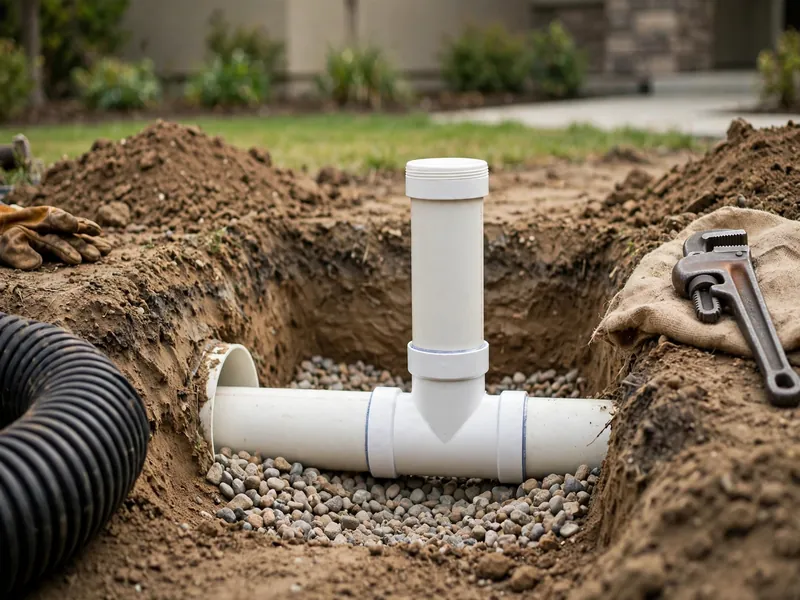
What a Cleanout Does for You
The cleanout's job is simple: it is a doorway into the lateral. A technician removes the cap and has straight-line access to the pipe running to the street. Camera inspections take minutes instead of an hour of setup. Cleaning cables feed directly in. Blockages get cleared from the ideal angle.
Compare that with the alternatives. Pulling a toilet means draining it, unbolting it, wrestling it aside without cracking the porcelain or damaging the flange, doing the work through the flange opening, then resetting the toilet with a new wax ring and hoping it seals perfectly. It adds an hour or more to every visit and introduces risks — cracked toilets, damaged flanges, imperfect reseals — that a cleanout eliminates entirely.
In emergencies the difference is even starker. A midnight backup with a cleanout means the technician is working within minutes of arrival. Without one, the first hour is spent gaining access while sewage sits in the house. When you are paying emergency rates, access time is money.
Where It Goes and What It Looks Like
Most cleanouts go in the front yard along the lateral's path, often within a few feet of the foundation or near the property line. The location balances accessibility for technicians with discretion for the homeowner — the cap sits at or slightly above grade and can be hidden with a valve box or landscaping that does not obstruct access.
Some installations use a two-way cleanout, which allows access in both directions — toward the house and toward the street. This is particularly useful because blockages can occur on either side of the access point, and a two-way fitting means one cleanout serves the whole line.
If you are unsure where your lateral runs, the installer will locate it first — often with a camera and locator, or from municipal records. Do not guess. Installing a cleanout that misses the line is an expensive mistake that a half hour of locating prevents.
What the Installation Involves
The project itself is refreshingly small by sewer-work standards. The line is located, a modest excavation exposes it at the chosen point, the pipe is cut, and a sanitary tee or wye fitting with a riser and cap is installed. The excavation is backfilled, the surface restored, and the cap left accessible.
Most residential installations are completed in a day. The excavation is typically a few feet square — nothing like the trench of a full replacement. If the line is deep or under concrete, the project gets somewhat more involved, but it remains a minor job compared to any repair it will someday facilitate.
A permit is generally required since the work alters the lateral, and the installation is usually inspected. This is routine — your installer handles the paperwork. The inspection verifies the fitting is correct and the connection is sound, which is exactly the assurance you want on work that will be buried.
The Payoff: Every Future Service Gets Easier
The economics of a cleanout are simple: it is a small one-time project that reduces the cost of every future sewer service. Camera inspections are faster. Cleanings are faster. Emergency calls are faster. Over the life of homeownership, those savings compound — and that is before counting the avoided risks of toilet-pulling and the faster response during backups.
There is also a resale angle. A visible, accessible cleanout signals to buyers and their inspectors that the sewer system is maintainable. In a market where savvy buyers are starting to ask about sewer inspections, having the access point already in place removes friction from the transaction.
If your line ever needs major work — lining, bursting, or replacement — the cleanout earns its keep again. Trenchless repair methods use the cleanout as an entry point, and even excavation projects go smoother with established access. A professional sewer cleaning through a proper cleanout versus through a pulled toilet is the difference between routine service and an ordeal. If your Perth Amboy home does not have one, this is the project to prioritize before you need it.